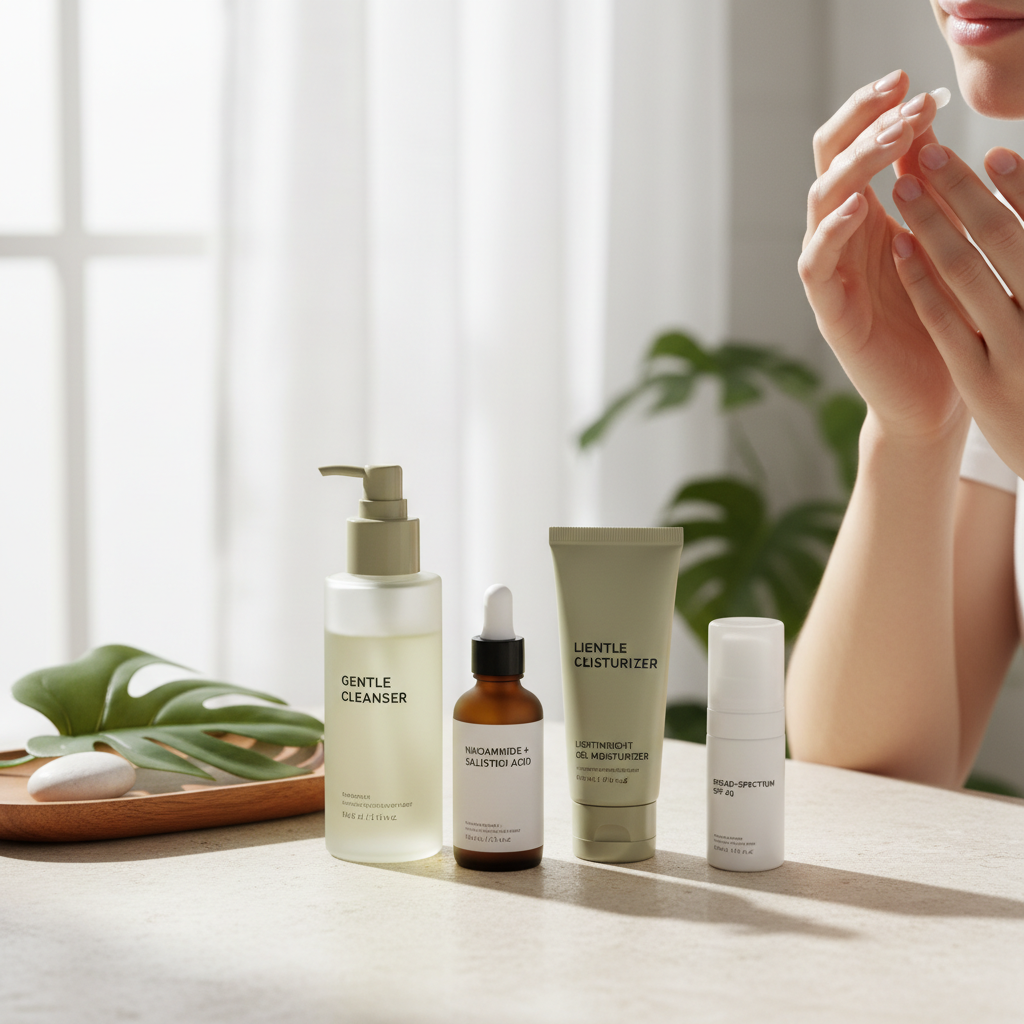
How to Build a Minimalist Morning Routine for Oily Skin in 2026
Building a minimalist morning routine for oily skin in 2026 centers on gentle cleansing, targeted treatment with active ingredients like niacinamide or salicylic acid, lightweight hydration, and non-negotiable broad-spectrum SPF. The goal is to balance oil production and protect the skin barrier without over-stripping, leading to clearer, healthier skin with fewer steps.
Introduction
The skincare landscape of 2026 emphasizes smart, effective routines over product overload, especially for those navigating the challenges of oily skin. For years, the instinct has been to aggressively combat oil, often leading to irritation and a compromised skin barrier. This article will guide you through crafting a minimalist morning routine that respects your skin’s natural balance while effectively managing excess sebum, preventing breakouts, and providing essential protection.
Why a Minimalist Morning Routine for Oily Skin?
For individuals with oily skin, the temptation to use multiple “oil-control” products can be strong. However, this often backfires. Over-cleansing, using harsh toners, or layering too many active ingredients can strip the skin of its natural oils, triggering a reactive increase in sebum production, leading to more oiliness, breakouts, and a weakened skin barrier. A minimalist approach focuses on essential steps and potent, well-chosen ingredients, reducing the risk of irritation and allowing your skin to thrive.
The Skin Barrier Focus in 2026
The understanding and emphasis on the skin barrier’s health have never been more critical than in 2026. A strong, intact skin barrier is your first line of defense against environmental aggressors, moisture loss, and pathogens. For oily skin, maintaining barrier integrity is crucial; a compromised barrier can lead to increased sensitivity, inflammation, and even exacerbate oiliness as the skin attempts to compensate for damage. Minimalist routines prioritize gentle care to preserve this vital protective layer.
What’s the Core Philosophy for Oily Skin?
The core philosophy for managing oily skin effectively is balance, not aggressive drying. It’s about regulating sebum production, keeping pores clear, providing adequate hydration, and protecting against environmental damage, all while supporting the skin’s natural functions.
- Gentle Care: Avoid harsh cleansers or toners that strip natural oils.
- Targeted Treatment: Use specific actives to address oiliness and breakouts.
- Hydration, Not Heavy Emollients: Oily skin still needs moisture, just in lightweight forms.
- Consistent Protection: Daily broad-spectrum SPF is non-negotiable for all skin types.
- Listen to Your Skin: Adjust your routine based on how your skin responds to products and environmental factors.
- Quality Over Quantity: Invest in fewer, high-quality products with proven ingredients.
- Patience: Skincare results take time; consistency is key.
Step 1: Gentle Cleansing – What’s the Best Approach?
The first step in any morning routine is cleansing. For oily skin, this doesn’t necessarily mean a vigorous scrub. Many dermatologists now suggest that for some, a splash of cool water might be sufficient in the morning, especially if you cleansed thoroughly the night before. However, if you wake up feeling particularly oily or prefer a fresh start, a mild cleanser is appropriate.
Choosing Your Cleanser
Opt for a gentle, low-pH foaming or gel cleanser. Look for formulas that are sulfate-free and non-stripping. Ingredients like glycerin, ceramides, or niacinamide can be beneficial even in a cleanser, helping to maintain moisture and barrier function. Avoid cleansers with harsh exfoliants or strong fragrances that can irritate and potentially trigger more oil production. The goal is to remove excess oil and any overnight impurities without leaving your skin feeling tight or “squeaky clean.”
Step 2: Targeted Treatment – Which Actives Truly Benefit Oily Skin?
After cleansing, the next step is to apply targeted treatments. For oily skin, this typically means serums or toners packed with active ingredients designed to regulate oil, minimize pores, and provide antioxidant protection.
Niacinamide (Vitamin B3)
Niacinamide is a powerhouse ingredient for oily skin. It helps to regulate sebum production, minimize the appearance of pores, improve skin tone, and strengthen the skin barrier. It’s also an antioxidant and has anti-inflammatory properties, making it excellent for reducing redness and post-acne marks.
Salicylic Acid (BHA)
Salicylic acid, a beta-hydroxy acid (BHA), is oil-soluble, allowing it to penetrate into pores and dissolve sebum and dead skin cells. This makes it highly effective for preventing and treating blackheads, whiteheads, and general congestion. In the US, salicylic acid is an FDA-approved active ingredient for acne treatment, typically found in concentrations of 0.5% to 2%.
Vitamin C (L-Ascorbic Acid and Derivatives)
Vitamin C is a potent antioxidant that protects the skin from environmental damage, brightens the complexion, and can help fade hyperpigmentation. For oily skin, look for stable forms of Vitamin C, such as L-Ascorbic Acid in a water-free suspension or derivatives like Sodium Ascorbyl Phosphate, which can be less irritating and better tolerated.
Hyaluronic Acid and Ceramides
While not directly targeting oil, these ingredients are crucial for maintaining hydration and skin barrier health. Hyaluronic acid draws moisture into the skin without adding oiliness, providing lightweight hydration. Ceramides are lipids that are naturally found in the skin barrier, and topical application can help to reinforce it, preventing moisture loss and irritation.
Here’s a comparison of key actives for oily skin:
| Active Ingredient | Primary Benefit for Oily Skin | How It Works | Best For… |
|---|---|---|---|
| Niacinamide (Vitamin B3) | Sebum regulation, pore minimization | Reduces oil production, strengthens barrier, anti-inflammatory. | Overall skin health, pore appearance, mild oiliness. |
| Salicylic Acid (BHA) | Pore clearing, acne prevention | Exfoliates inside pores, dissolves oil and dead cells. | Blackheads, whiteheads, congested pores, active breakouts. |
| Vitamin C (various forms) | Antioxidant protection, brightening | Neutralizes free radicals, brightens skin, fades dark spots. | Environmental protection, dullness, post-inflammatory hyperpigmentation. |
| Hyaluronic Acid | Lightweight hydration | Attracts and holds moisture in the skin without greasiness. | All oily skin types needing non-comedogenic hydration. |
Step 3: Hydration – Do Oily Skin Types Need Moisturizer?
Absolutely. This is a common misconception. Oily skin still requires hydration to maintain a healthy barrier and prevent the skin from overcompensating with more oil production. The key is choosing the right type of moisturizer.
Selecting the Right Moisturizer
Opt for lightweight, non-comedogenic, oil-free formulas. Gel-creams, fluid lotions, or water-based moisturizers are excellent choices. Look for ingredients like hyaluronic acid, glycerin, squalane (in non-heavy forms), and ceramides. These provide essential moisture without feeling heavy or clogging pores. If you’re using a hydrating serum (like one with hyaluronic acid), and your skin feels sufficiently moisturized, you might be able to skip a dedicated moisturizer step, especially if your SPF offers some hydrating properties.
Step 4: Sun Protection – The Non-Negotiable Shield
This is the most crucial step in any morning routine, regardless of skin type. Daily, broad-spectrum sunscreen with an SPF of 30 or higher is essential to protect against UV damage, which can lead to premature aging, hyperpigmentation, and increased risk of skin cancer.
Mineral vs. Chemical Sunscreens for Oily Skin
* Mineral sunscreens (containing zinc oxide and/or titanium dioxide) physically block UV rays. They can sometimes leave a white cast, but modern formulations have significantly improved, often blending seamlessly. They are generally well-tolerated by sensitive and acne-prone skin.
* Chemical sunscreens absorb UV rays and convert them into heat. They tend to be lighter in texture and absorb easily, making them popular for daily wear. Newer chemical filters are often more stable and less prone to irritation.
For oily skin, look for fluid, gel, or matte-finish sunscreen formulations. Many brands now offer tinted sunscreens that can double as a light foundation, helping to control shine throughout the day.
Sunscreen Reapplication Science in 2026
The science of sunscreen reapplication has become more refined. While the general rule remains “every two hours” during direct sun exposure, 2026 insights confirm that for typical indoor days with minimal sun exposure, a single thorough morning application might suffice for initial protection. However, if you’re outdoors, exercising, sweating, or swimming, reapplication is critical. Advances in dermal-grade tools, like compact UV cameras or smart patches, are helping individuals understand their personal UV exposure and when reapplication is truly needed, moving beyond generic advice to personalized protection.
Putting It All Together: A Sample Minimalist Morning Routine
Here’s a streamlined, effective morning routine for oily skin:
- Gentle Cleanse: Splash face with cool water or use a pea-sized amount of a mild, low-pH gel cleanser. Rinse thoroughly and pat dry with a clean towel.
- Targeted Treatment: Apply 2-3 drops of a niacinamide serum across your face. Alternatively, if congestion is your primary concern, use a salicylic acid serum or toner on affected areas. Allow to absorb for 60 seconds.
- Lightweight Hydration (Optional): If your skin feels tight or dehydrated, apply a small amount of a gel-cream or fluid moisturizer. If your chosen serum is hydrating enough or your SPF has moisturizing properties, you can skip this step.
- Broad-Spectrum SPF: Apply a generous amount (about a nickel-sized dollop for your face) of a broad-spectrum SPF 30+ sunscreen. Opt for a matte or gel formula if shine is a concern. This is your final and most important step.
Drugstore vs. Prestige: Finding Value for Oily Skin
In 2026, the lines between drugstore and prestige skincare continue to blur, especially concerning active ingredients. Many effective, dermatologist-recommended products for oily skin can be found at your local drugstore. Brands like CeraVe, La Roche-Posay, and The Ordinary offer excellent formulations with FDA-approved actives (like salicylic acid) and proven ingredients (like niacinamide and ceramides) at accessible price points. Prestige brands often invest more in elegant textures, unique delivery systems, or proprietary ingredient complexes, but the fundamental efficacy of core actives often remains consistent across price points. Focus on ingredient lists and formulations that suit your skin, rather than solely on brand name or price tag.
Frequently Asked Questions
Can I skip cleansing in the morning if my skin is oily?
For some with oily skin, especially if you cleansed thoroughly the night before and don’t feel overly oily upon waking, a simple splash of cool water can be sufficient. However, if you wake up with noticeable oiliness or product residue, a gentle cleanser is recommended to prepare your skin for subsequent steps.
Is retinol suitable for a morning routine for oily skin?
While retinol (and its stronger counterpart, retinal) are fantastic for oily and acne-prone skin, they are generally best reserved for your *evening* routine. Retinoids can increase sun sensitivity, making morning application less ideal. Using them at night allows them to work effectively without the added risk of sun exposure.
How do I know if a product is “non-comedogenic”?
The term “non-comedogenic” means a product is formulated not to clog pores. While there’s no official FDA certification for this claim, reputable brands conduct testing to ensure their products are suitable for acne-prone skin. Look for this claim on the packaging, and scrutinize ingredient lists for common pore-clogging culprits (like heavy oils or waxes, if you know your skin reacts to them), though individual reactions can vary.
What if I have sensitive *and* oily skin?
If you have sensitive and oily skin, prioritize gentle, fragrance-free formulations. Introduce new active ingredients slowly and one at a time. Niacinamide is often well-tolerated by sensitive skin and can help strengthen the barrier. For exfoliation, consider lower concentrations of salicylic acid or gentler alternatives like PHA (polyhydroxy acids) if AHAs or BHAs prove too irritating. Always patch test new products.
Should I use a facial oil if I have oily skin?
It might seem counterintuitive, but certain lightweight facial oils can be beneficial for oily skin. Oils like squalane, jojoba, or rosehip oil are non-comedogenic and can help to balance sebum production by signaling to your skin that it has enough oil, preventing overproduction. If you choose to use one, apply it sparingly as the last step before SPF, or mix a drop into your moisturizer.
Conclusion
Building a minimalist morning routine for oily skin in 2026 is about intelligent choices and consistent application. By focusing on gentle cleansing, targeted active ingredients that truly make a difference, lightweight hydration, and diligent sun protection, you can achieve clearer, more balanced, and healthier skin. Remember, less is often more, allowing your skin to thrive without being overwhelmed by unnecessary products.