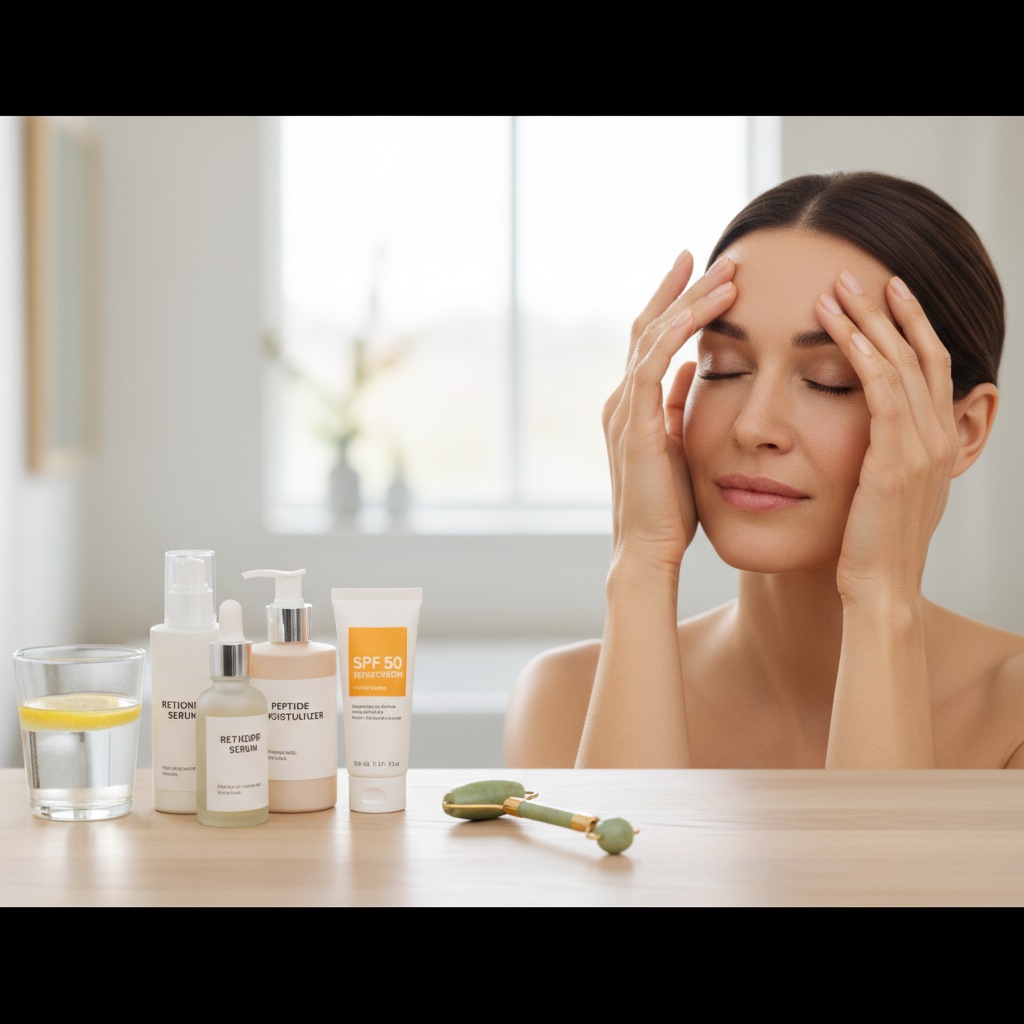
Addressing forehead lines effectively involves a multi-pronged approach combining potent topical skincare ingredients like retinoids and peptides, professional in-office treatments such as neuromodulators, and diligent preventative measures including consistent SPF application and hydration. By understanding the causes and choosing evidence-informed strategies tailored to your skin, you can significantly reduce their appearance and prevent further development.
Introduction
Those horizontal etchings on your forehead, often called “forehead lines” or “worry lines,” are a common skincare concern for many women. While a natural part of aging and facial expression, their appearance can be softened, treated, and even prevented with the right knowledge and consistent effort. In 2026, with advances in dermatology and skincare science, we have more effective tools than ever to tackle these tell-tale lines.
What Causes Forehead Lines, Anyway?
Understanding the root causes of forehead lines is the first step toward effectively treating and preventing them. It’s not just about getting older; several factors contribute to their formation.
Dynamic vs. Static Lines
Forehead lines typically begin as dynamic lines, which are temporary wrinkles that appear only when you make certain facial expressions, like raising your eyebrows in surprise or concentration. Over time, with repeated muscle contractions, these lines can become permanently etched into the skin, even when your face is at rest. These are known as static lines.
The Role of Collagen and Elastin
The skin’s structural integrity relies heavily on collagen and elastin, proteins that provide firmness, elasticity, and a smooth texture. As we age, the natural production of collagen and elastin slows down, and existing fibers degrade. This loss of structural support makes the skin less resilient, allowing dynamic lines to transition into static wrinkles more easily.
Lifestyle and Environmental Factors
- Sun Exposure: Ultraviolet (UV) radiation from the sun is a primary culprit in premature skin aging. It breaks down collagen and elastin, leading to photoaging, which manifests as wrinkles, fine lines, and uneven skin tone.
- Repeated Facial Expressions: While a natural part of communication, consistently raising your eyebrows or frowning contributes to the formation of dynamic lines that eventually become static.
- Dehydration: Skin that lacks adequate moisture appears duller and can emphasize the appearance of fine lines. Proper hydration helps plump up skin cells, making lines less noticeable.
- Smoking: Nicotine and other chemicals in cigarettes constrict blood vessels, reducing oxygen and nutrient flow to the skin. Smoking also accelerates collagen breakdown, leading to premature wrinkles.
- Stress: Chronic stress can contribute to inflammation and oxidative stress in the body, which can negatively impact skin health and accelerate aging processes.
- Sleep Position: Repeated pressure on the face during sleep can, over time, contribute to sleep lines and wrinkles, including on the forehead.
What Are the Most Effective In-Office Treatments for Forehead Lines?
For those seeking more immediate and dramatic results, or when topical treatments aren’t enough, professional in-office procedures offer powerful solutions for forehead lines, backed by dermatologist consensus.
Neuromodulators (Botox, Dysport, Xeomin, Jeuveau)
These FDA-approved injectables are the gold standard for treating dynamic forehead lines. They work by temporarily relaxing the muscles responsible for expressions like raising your eyebrows. By reducing muscle movement, neuromodulators smooth out existing dynamic lines and prevent new ones from forming. Results typically appear within a few days to two weeks and last 3-4 months. They are highly effective for dynamic lines but less so for deep static lines that have been present for a long time without muscle movement.
Dermal Fillers
While neuromodulators address muscle movement, dermal fillers, often hyaluronic acid-based, are sometimes used to plump up very deep, static forehead lines that persist even after muscle relaxation. This is a less common application for forehead lines compared to neuromodulators and requires an experienced injector due to the delicate anatomy of the forehead. Fillers add volume to depressions in the skin, smoothing out the appearance of severe static wrinkles.
Laser Resurfacing (Fractional, CO2)
Laser treatments, such as fractional non-ablative or ablative CO2 lasers, are excellent for improving skin texture, stimulating collagen production, and significantly reducing static lines. They work by creating controlled micro-injuries in the skin, prompting the body’s natural healing process and new collagen formation. Ablative lasers offer more dramatic results with more downtime, while non-ablative options provide a gentler approach with less recovery. These are particularly effective for improving the overall quality and firmness of the skin.
Chemical Peels
Chemical peels involve applying a solution to the skin to exfoliate the top layers, revealing smoother, more even-toned skin underneath. Superficial to medium-depth peels can improve the appearance of fine lines and texture by stimulating cell turnover and collagen production. While they won’t tackle deep static lines as effectively as lasers or injectables, they are a good option for overall skin rejuvenation and enhancing the efficacy of topical treatments.
Which Topical Skincare Ingredients Actually Work for Forehead Lines?
Consistent use of the right topical ingredients forms the cornerstone of any effective strategy against forehead lines. These active ingredients work to improve skin structure, accelerate cell turnover, and protect against environmental damage.
Retinoids: The Gold Standard
Retinoids are vitamin A derivatives and are widely considered the most effective topical ingredients for anti-aging. They work by accelerating cell turnover, stimulating collagen production, and improving skin elasticity. This helps to smooth out fine lines and wrinkles over time. Examples include:
- Retinol: An over-the-counter option, converted by the skin into retinoic acid.
- Retinaldehyde (Retinal): A newer, increasingly popular over-the-counter retinoid (a 2026 trend) that is one step closer to retinoic acid than retinol, making it more potent and faster-acting with often less irritation than prescription options.
- Tretinoin (Retin-A): A prescription-strength retinoic acid, offering the most potent effects but also potentially more irritation.
Start with a lower concentration and gradually increase frequency to build tolerance.
Peptides: The Building Blocks
Peptides are short chains of amino acids that act as messengers in the skin, signaling it to perform specific functions. Different types of peptides target different concerns:
- Signal Peptides: Encourage collagen and elastin production, helping to improve skin firmness and reduce wrinkle depth.
- Neuropeptides: Work to temporarily relax muscle contractions, mimicking the effects of injectables to soften the appearance of dynamic lines.
They are excellent complementary ingredients to retinoids.
Antioxidants: Vitamin C and Beyond
Antioxidants protect the skin from free radical damage caused by environmental aggressors like UV radiation and pollution, which contribute to collagen breakdown and premature aging.
- Vitamin C (L-Ascorbic Acid): A powerful antioxidant that also plays a crucial role in collagen synthesis, brightens the complexion, and reduces hyperpigmentation.
- Vitamin E, Ferulic Acid, Niacinamide: Other effective antioxidants that protect the skin and support its overall health. Niacinamide also helps strengthen the skin barrier and reduce inflammation.
Hydrators: Hyaluronic Acid and Ceramides
Hydrated skin looks plumper and smoother, making lines less noticeable.
- Hyaluronic Acid: A humectant that attracts and holds up to 1,000 times its weight in water, providing intense hydration and a temporary plumping effect.
- Ceramides: Lipids that are essential components of the skin barrier. A healthy skin barrier (a key 2026 focus) locks in moisture, protects against irritants, and supports overall skin resilience.
AHAs (Alpha Hydroxy Acids)
AHAs like glycolic acid and lactic acid are chemical exfoliants that gently dissolve the bonds between dead skin cells, promoting cell turnover and revealing smoother, brighter skin. Regular exfoliation can improve skin texture and reduce the appearance of fine lines.
Here’s a comparison of common topical product types for forehead lines:
| Product Type | Key Active Ingredients | Primary Mechanism for Forehead Lines | Ideal Skin Type/Concern |
|---|---|---|---|
| Retinoid Serum | Retinol, Retinaldehyde, Tretinoin | Accelerates cell turnover, stimulates collagen, improves elasticity. | All (start slow for sensitive); best for fine lines, texture, firmness. |
| Peptide Cream | Matrixyl, Argireline, Copper Peptides | Signals collagen production, some may relax muscle contractions. | All, especially those seeking collagen boost and gentle line softening. |
| Vitamin C Serum | L-Ascorbic Acid, Tetrahexyldecyl Ascorbate | Antioxidant protection, collagen support, brightening. | All; complements retinoids, good for daytime protection. |
| Hyaluronic Acid Serum | Sodium Hyaluronate, Hydrolyzed Hyaluronic Acid | Attracts and holds moisture, plumps skin, temporarily reduces line visibility. | All, especially dry/dehydrated; provides immediate plumping. |
| AHA Exfoliant | Glycolic Acid, Lactic Acid | Exfoliates dead skin cells, improves texture, enhances product penetration. | Oily, combination, mature; good for texture and mild lines. |
Can At-Home Tools Make a Difference for Forehead Lines?
The rise of dermal-grade at-home tools is a significant 2026 trend, offering accessible ways to complement your skincare routine and potentially enhance results for forehead lines.
Microcurrent Devices
These devices deliver low-level electrical currents to “train” facial muscles, similar to a non-invasive facelift. Regular use can help tone facial muscles, improve circulation, and potentially lift and firm the skin, which may subtly reduce the appearance of lines over time. Consistency is key for any noticeable effect.
LED Masks (Red Light)
Red light therapy, typically delivered via an LED mask, penetrates the skin to stimulate cellular activity, including collagen and elastin production. This can lead to improved skin firmness, reduced inflammation, and a softening of fine lines and wrinkles with consistent, long-term use.
Microneedling Rollers/Stamps (Caution)
At-home microneedling devices create tiny punctures in the skin, which can stimulate collagen production and enhance the absorption of topical products. While effective for texture and fine lines, extreme caution is advised. Improper use can lead to irritation, infection, or scarring. Always prioritize hygiene, use high-quality devices, and follow instructions meticulously. For deeper treatments, professional microneedling is always recommended.
How Can I Prevent Forehead Lines from Forming or Worsening?
Prevention is always easier than correction. Incorporating these habits into your daily life can significantly impact the long-term appearance of your forehead.
- Strict Sun Protection: Apply a broad-spectrum mineral SPF 30+ every morning, even on cloudy days. Reapply every two hours when outdoors or after sweating, a practice increasingly emphasized by 2026 sunscreen reapplication science. Wear hats and sunglasses for added physical protection.
- Hydrate from Within and Without: Drink plenty of water throughout the day to keep skin cells plump. Use hydrating serums (like hyaluronic acid) and moisturizers to lock in external moisture and support the skin barrier.
- Manage Facial Expressions: Be mindful of habits like consistently raising your eyebrows or frowning. While not always easy, conscious effort can reduce repetitive muscle movements that lead to dynamic lines.
- Consistent Skincare Routine: Incorporate retinoids, antioxidants, and barrier-supporting ingredients (like ceramides) into your daily and nightly routine. Consistency is paramount for long-term benefits.
- Prioritize Sleep: Aim for 7-9 hours of quality sleep each night. Sleep is when your skin repairs and regenerates itself. Consider sleeping on your back to minimize facial pressure.
- Healthy Diet: Consume a diet rich in antioxidants (fruits, vegetables), healthy fats (omega-3s), and lean proteins to support overall skin health and collagen production.
- Stress Reduction: Chronic stress can impact skin health. Incorporate stress-reducing activities like meditation, yoga, or hobbies into your routine.
Building Your Forehead Line Skincare Routine: Drugstore vs. Prestige and Skin Type Considerations
Navigating the vast world of skincare can be overwhelming. Here’s how to build an effective routine, considering your budget and skin type.
Drugstore vs. Prestige
The good news is that effective, evidence-based skincare doesn’t have to break the bank. Many drugstore brands offer excellent formulations with FDA-approved active ingredients like retinoids, vitamin C, and hyaluronic acid that rival their prestige counterparts. Focus on the ingredient list and formulation rather than just the brand name or price tag. Prestige brands often invest more in elegant textures, unique delivery systems, or a wider range of supporting botanicals, but core active ingredients are widely available. Dermatologist consensus supports efficacy across price points.
Tailoring to Your Skin Type
- Oily/Combination Skin: Look for lighter gel or serum textures that are non-comedogenic (won’t clog pores). Retinoids can be particularly beneficial for their ability to regulate oil production in addition to anti-aging effects.
- Dry/Mature Skin: Opt for richer creams and balms that provide intense hydration and barrier support. Ingredients like ceramides, hyaluronic acid, and squalane are excellent. Introduce retinoids gently, and pair them with a robust moisturizer.
- Sensitive Skin: Start with lower concentrations of active ingredients (especially retinoids) and introduce them slowly, perhaps every other night. Prioritize products designed to strengthen the skin barrier with ingredients like ceramides and niacinamide. Always patch test new products. Avoid harsh physical exfoliants or excessive use of AHAs.
Frequently Asked Questions
Is it too late to start treating forehead lines?
No, it’s never too late! While prevention is ideal, significant improvements can be made even with established lines. A combination of consistent topical treatments, lifestyle adjustments, and potentially in-office procedures can dramatically reduce their appearance and prevent further worsening.
How long does it take to see results from topical treatments?
Patience and consistency are key. For topical treatments like retinoids, visible improvements in fine lines and texture typically take 3-6 months of consistent use. More significant changes, especially in deeper lines, may take 9-12 months or longer. Hydrating ingredients can offer more immediate plumping effects.
Can I use multiple anti-aging ingredients at once?
Yes, many anti-aging ingredients can be effectively layered. For example, a vitamin C serum in the morning for antioxidant protection and a retinoid at night for cell turnover is a popular and effective combination. However, introduce new actives one at a time to monitor your skin’s reaction, and be cautious about combining multiple strong exfoliants (like AHAs and retinoids) initially to avoid irritation.
What’s the difference between retinol and retinaldehyde?
Both are over-the-counter retinoids. Retinol must undergo two conversion steps in the skin to become retinoic acid (the active form). Retinaldehyde (retinal) requires only one conversion step, making it more potent and faster-acting than retinol, often with a better tolerability profile than prescription tretinoin. It’s a popular choice in 2026 for those seeking stronger results without a prescription.
Do face exercises help with forehead lines?
The efficacy of face exercises for reducing forehead lines is largely anecdotal and lacks robust scientific evidence. Some experts believe they may help strengthen underlying muscles, but others suggest that repeatedly contracting facial muscles could actually contribute to dynamic wrinkles, similar to repetitive expressions. Focus on evidence-backed topical treatments and professional procedures for reliable results.
Conclusion
Addressing forehead lines is a journey that combines scientific understanding with diligent personal care. By embracing a multi-faceted approach – from powerhouse topical ingredients and advanced in-office procedures to smart preventative habits – you can significantly diminish existing lines and maintain a smoother, more youthful-looking forehead. Consult with a dermatologist to tailor the most effective strategy for your unique skin and concerns, ensuring you achieve the best possible results.