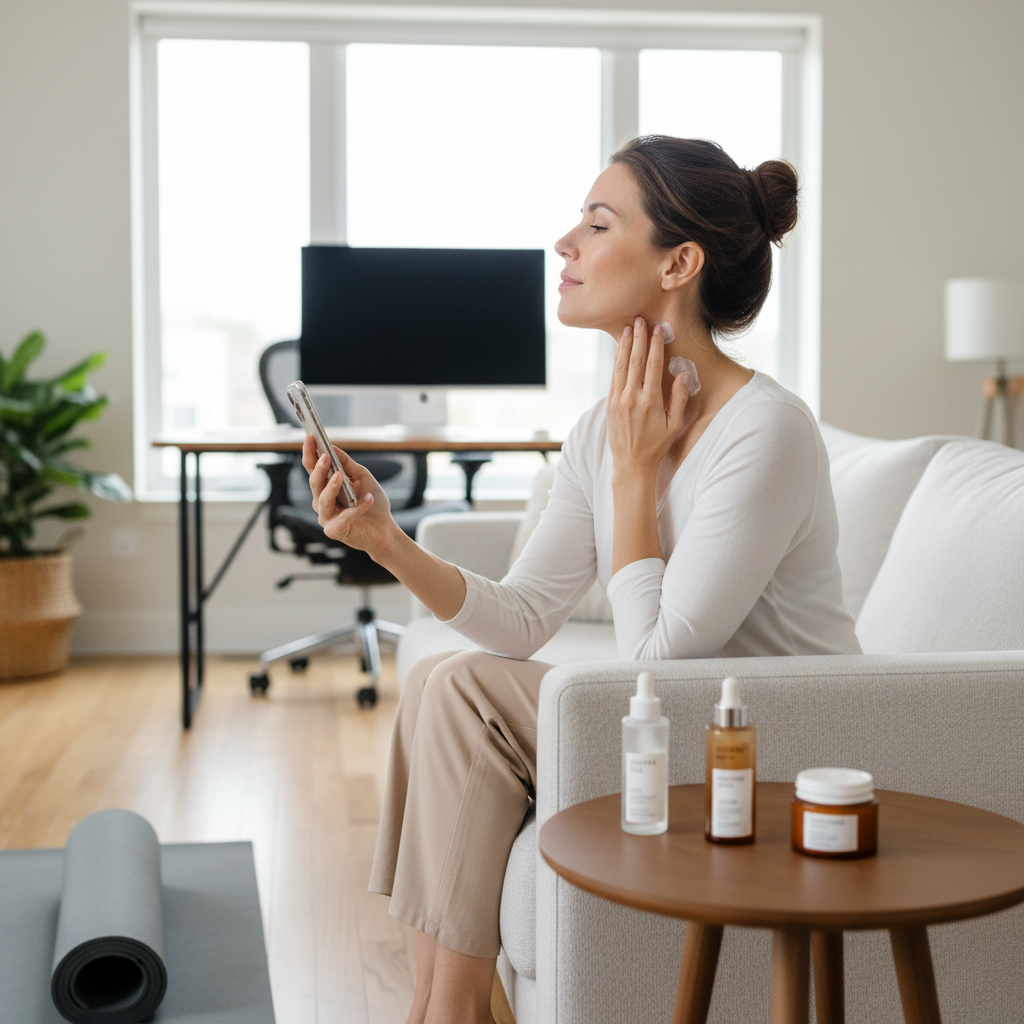
A comprehensive evening skincare routine is crucial for busy American women to repair, regenerate, and protect their skin against daily stressors. By following a targeted 5-step process – double cleansing, applying treatment serums, using eye cream, moisturizing, and sealing with an occlusive – you can effectively address concerns like aging, acne, and dehydration, optimizing skin health overnight.

Introduction
In the whirlwind of modern American life, finding time for self-care can feel like a luxury. Yet, your evening skincare routine isn’t just about pampering; it’s a vital investment in your skin’s long-term health, resilience, and appearance. As we navigate 2026, the emphasis is increasingly on evidence-based practices that deliver real results without demanding excessive time.
Why is an Evening Skincare Routine So Important for Busy Women?
The nighttime hours are when your skin naturally shifts into repair mode. Throughout the day, your skin acts as a shield, battling environmental aggressors like pollution, UV radiation (even indoors!), makeup, and stress. Come evening, it’s time for triage and regeneration. A well-structured evening routine helps to:
- Remove Impurities: Clear away the day’s accumulation of dirt, oil, makeup, and pollutants that can clog pores and dull the complexion.
- Facilitate Repair: Support the skin’s natural healing processes, which accelerate overnight. This is when cells regenerate, and collagen production can be boosted.
- Maximize Product Efficacy: Ingredients designed to treat specific concerns, like retinoids or AHAs, work best when applied to clean skin and aren’t immediately exposed to sunlight or environmental damage.
- Prevent Premature Aging: Consistent evening care helps mitigate the effects of oxidative stress and inflammation, reducing the appearance of fine lines, wrinkles, and hyperpigmentation.
- Strengthen the Skin Barrier: A healthy skin barrier is your first line of defense. Nighttime is ideal for replenishing ceramides and other lipids essential for barrier integrity, especially with the 2026 focus on barrier health.
For the busy woman, this means a more efficient morning routine and waking up to skin that’s visibly healthier, calmer, and more prepared to face the day ahead. It’s about working smarter, not harder, to achieve lasting skin benefits.
What are the 5 Essential Steps for a Nightly Skincare Routine?
Crafting an effective evening routine doesn’t have to be complicated or time-consuming. Here are the five foundational steps, designed for maximum impact with minimal fuss.
Step 1: Double Cleansing – Why and How?
Double cleansing is the cornerstone of a truly clean canvas, especially if you wear makeup, sunscreen, or live in an urban environment. It ensures all traces of daily grime are removed, allowing subsequent products to penetrate and work more effectively.
- First Cleanse (Oil-Based): Use an oil cleanser, balm, or micellar water to dissolve oil-based impurities like makeup, SPF, and excess sebum. Gently massage onto dry skin for 60 seconds, then emulsify with water and rinse.
- Second Cleanse (Water-Based): Follow with a gentle, hydrating water-based cleanser suitable for your skin type. This removes any remaining residue and cleanses the skin itself, not just the surface “gunk.” Look for formulas that don’t strip the skin, preserving its natural moisture barrier.
Benefit: Prevents clogged pores, allows active ingredients to absorb better, and leaves skin feeling truly clean without tightness.
Step 2: Treatment Serum – Which Actives Should I Choose?
This is where you target specific concerns. Serums are concentrated formulas designed to deliver potent active ingredients deep into the skin. Apply 2-3 drops to slightly damp skin after cleansing.
- For Anti-Aging & Renewal: Retinoids (retinol, retinaldehyde, or prescription tretinoin) are gold-standard. They promote cell turnover, stimulate collagen production, and reduce the appearance of fine lines, wrinkles, and hyperpigmentation. (Note: Retinaldehyde is a 2026 favorite for its superior efficacy to retinol with less irritation.)
- For Brightening & Even Tone: Niacinamide (Vitamin B3) helps improve skin barrier function, reduce redness, minimize pores, and even out skin tone. Vitamin C (especially L-ascorbic acid) can also be used at night if not already in your morning routine, offering antioxidant protection and brightening.
- For Hydration & Plumping: Hyaluronic Acid attracts and holds up to 1000 times its weight in water, providing intense hydration and a plump, dewy appearance. It’s excellent for all skin types, especially dry or dehydrated.
- For Acne & Congestion: Salicylic Acid (BHA) is oil-soluble, allowing it to penetrate pores and dissolve sebum, making it effective for blackheads, whiteheads, and oily skin. AHAs (like Glycolic or Lactic Acid) exfoliate the skin’s surface, improving texture and brightness.
- For Repair & Firmness: Peptides are chains of amino acids that signal the skin to produce more collagen and elastin, improving firmness and reducing signs of aging.
Benefit: Addresses specific skin concerns with targeted, high-potency ingredients.
Step 3: Eye Cream – Is It Really Necessary?
Yes, an eye cream is a valuable addition. The skin around your eyes is thinner and more delicate than the rest of your face, making it more prone to showing signs of aging, fatigue, and dehydration. A dedicated eye cream is formulated specifically for this sensitive area.
- Gently pat a pea-sized amount with your ring finger around the orbital bone, avoiding direct contact with the lash line.
- Look for ingredients like peptides for firmness, hyaluronic acid for hydration, ceramides for barrier support, and mild retinoids formulated for the eye area to address fine lines.
Benefit: Hydrates, protects, and treats the delicate eye area, reducing the appearance of fine lines, dark circles, and puffiness.
Step 4: Moisturizer – How Do I Lock Everything In?
A good moisturizer is non-negotiable. It seals in the serums and treatments you’ve just applied, provides essential hydration, and supports your skin’s barrier function. Choose a moisturizer appropriate for your skin type:
- For Oily/Combination Skin: Opt for a lightweight gel or oil-free lotion.
- For Dry/Mature Skin: Choose a richer cream with emollients and humectants.
- For Sensitive Skin: Look for fragrance-free, hypoallergenic formulas with soothing ingredients like ceramides.
Key ingredients to look for include ceramides (essential lipids for barrier health), hyaluronic acid, glycerin, and occlusives like shea butter or petrolatum (in smaller amounts for moisturizers). Apply an even layer over your face and neck.
Benefit: Hydrates, nourishes, and protects the skin barrier, preventing moisture loss overnight.
Step 5: Occlusive or Sleeping Mask – What’s the Final Touch?
This optional but highly beneficial step acts as a final seal, particularly for those with dry, dehydrated, or compromised skin barriers. An occlusive creates a physical barrier on the skin’s surface, preventing transepidermal water loss (TEWL) and locking in all the previous layers of skincare.
- Occlusive Balm: A thin layer of a petroleum jelly-based product (often referred to as “slugging”) can be incredibly effective for very dry or compromised skin.
- Sleeping Mask: These are typically richer, more nourishing creams or gels designed to be left on overnight. They often contain a blend of humectants, emollients, and mild occlusives.
Apply a small amount as the very last step. This is especially beneficial in dry climates or during colder months. For those with oily skin, this step might be too heavy, or you might opt for a very lightweight sleeping mask rather than a heavy occlusive.
Benefit: Minimizes overnight moisture loss, enhances the efficacy of underlying products, and provides intense nourishment.
How Do I Choose the Right Products for My Skin Type and Concerns?
Understanding your skin type is paramount to selecting effective products. While personal preferences vary, dermatologist consensus often points to certain ingredients and formulations for specific needs. The debate between drugstore and prestige brands often boils down to formulation elegance and ingredient concentration, but effective actives can be found at all price points.
Oily/Acne-Prone Skin
Look for non-comedogenic, oil-free formulas.
Actives: Salicylic Acid (BHA) for exfoliation and pore clearing, Niacinamide for oil regulation and redness reduction, Retinoids for cell turnover and acne prevention.
Texture: Gels, lightweight lotions.
Dry/Sensitive Skin
Prioritize gentle, fragrance-free, hydrating, and barrier-supporting ingredients.
Actives: Hyaluronic Acid for hydration, Ceramides and Peptides for barrier repair, gentle Retinoids (like Retinaldehyde, starting slow).
Texture: Rich creams, balms, oil-based cleansers.
Combination Skin
This type often benefits from a hybrid approach, sometimes using different products for different areas or balancing lighter textures with targeted treatments.
Actives: Niacinamide for balancing, Hyaluronic Acid for overall hydration, gentle AHAs or BHAs for T-zone.
Texture: Lotions, gel-creams.
Mature Skin
Focus on anti-aging, hydration, and barrier support to combat dryness, fine lines, and loss of firmness.
Actives: Retinoids (gold standard), Peptides for collagen support, Hyaluronic Acid for plumping, Ceramides for barrier strength, Antioxidants.
Texture: Rich creams, nourishing oils, serums.
“The best skincare routine isn’t about the most expensive products, but the most consistent use of products that genuinely benefit your unique skin. Always listen to your skin and consult a dermatologist for persistent concerns.” – Dermatologist Consensus, 2026.
Which Skincare Actives Are Most Effective for Nighttime Use?
Nighttime is prime time for potent actives that can repair and rejuvenate without daytime interference from UV exposure. Here’s a comparison of some of the most effective ingredients:
| Active Ingredient | Primary Benefit | Mechanism of Action | Best For (Skin Type/Concern) |
|---|---|---|---|
| Retinoids (e.g., Retinaldehyde) | Anti-aging, acne, texture refinement, hyperpigmentation | Boosts cell turnover, stimulates collagen, regulates oil production. Retinaldehyde converts to retinoic acid more efficiently than retinol, offering faster results with less irritation than prescription options. | Mature, acne-prone, dull, uneven skin. |
| Alpha Hydroxy Acids (AHAs – Glycolic, Lactic) | Exfoliation, brightening, texture improvement | Exfoliate the surface layer of skin, loosening dead skin cells to reveal brighter, smoother skin. Glycolic is stronger; Lactic is gentler and hydrating. | Dull, uneven texture, hyperpigmentation, dry skin (Lactic). |
| Niacinamide (Vitamin B3) | Barrier support, redness reduction, oil regulation, pore appearance | Strengthens skin barrier, reduces inflammation, inhibits sebum production, improves skin elasticity. | All skin types, especially sensitive, acne-prone, red, oily. |
| Peptides | Firming, anti-aging, collagen support | Signal skin cells to produce more collagen and elastin, improving firmness and reducing the appearance of lines. | Mature, sagging, fine lines, loss of elasticity. |
| Ceramides | Skin barrier repair, hydration, soothing | Essential lipids that make up a significant portion of the skin barrier, preventing moisture loss and protecting against irritants. | Dry, sensitive, compromised barrier, mature skin. |
Can At-Home Skincare Tools Enhance My Evening Routine?
While the core 5-step routine is powerful on its own, the 2026 landscape sees an increasing integration of sophisticated at-home dermal-grade tools. These can certainly amplify results, but should be introduced carefully and after mastering your basic routine.
Tools like LED masks (red light for collagen, blue light for acne), microcurrent devices (for facial muscle toning), or gentle ultrasonic cleansing devices can complement your evening regimen. Always follow manufacturer instructions and consider consulting a dermatologist before incorporating new tools, especially if you have sensitive skin or specific conditions. Remember, consistency with your topical products is always the foundation.
Frequently Asked Questions
How long should I wait between steps in my evening routine?
For most steps, waiting a minute or two for the product to absorb is sufficient. However, if you’re using potent actives like retinoids or strong acids, some dermatologists recommend waiting 10-20 minutes after cleansing before applying them to ensure your skin’s pH is stable and to minimize potential irritation. Otherwise, a quick absorption time between layers is fine, especially with lighter textures.
Is a 5-step routine too much for sensitive skin?
Not necessarily, but the choice of products is critical. For sensitive skin, focus on gentle, fragrance-free, hypoallergenic formulations with barrier-supporting ingredients like ceramides and hyaluronic acid. Introduce actives one at a time, starting with lower concentrations and less frequently. A simpler 3-step routine (cleanse, serum, moisturizer) might be a better starting point, gradually adding steps as your skin tolerates them.
Can I use Vitamin C at night?
While Vitamin C is often recommended for morning use due to its antioxidant protection against environmental aggressors, it can absolutely be used at night. If you’re not using other strong actives like retinoids or AHAs, applying Vitamin C at night can help with brightening, collagen production, and repairing damage from the day. Just be mindful of potential interactions if layering multiple potent ingredients.
What if I only have 5 minutes for my evening routine?
On those truly hectic nights, prioritize the essentials: cleanse thoroughly (a single effective cleanser can work in a pinch), apply a multi-tasking treatment serum (like one with niacinamide or a gentle retinoid), and finish with a good moisturizer. Skipping a step occasionally is better than skipping the entire routine. Consistency, even with a condensed version, yields better results than sporadic elaborate routines.
When will I see results from my evening skincare routine?
Results vary depending on the concern and the active ingredients used. For hydration and barrier improvement, you might notice a difference within days or a week. For concerns like acne, fine lines, or hyperpigmentation, it typically takes 4-12 weeks of consistent use to see significant changes, as skin cell turnover cycles take time. Patience and consistency are key.
Conclusion
An optimized 5-step evening skincare routine is more than just a beauty ritual; it’s a strategic investment in your skin’s health and resilience. By consistently dedicating these few minutes each night, busy American women can effectively combat daily damage, support natural repair processes, and wake up to a complexion that feels refreshed, rejuvenated, and ready to take on another day.