The ideal pH for your skin is slightly acidic, typically ranging from 4.7 to 5.7, which is crucial for maintaining a healthy skin barrier and microbiome. Consequently, most skincare products should also fall within a slightly acidic range, generally between pH 4.5 and 6.0, to support this natural balance and optimize ingredient efficacy without causing irritation.
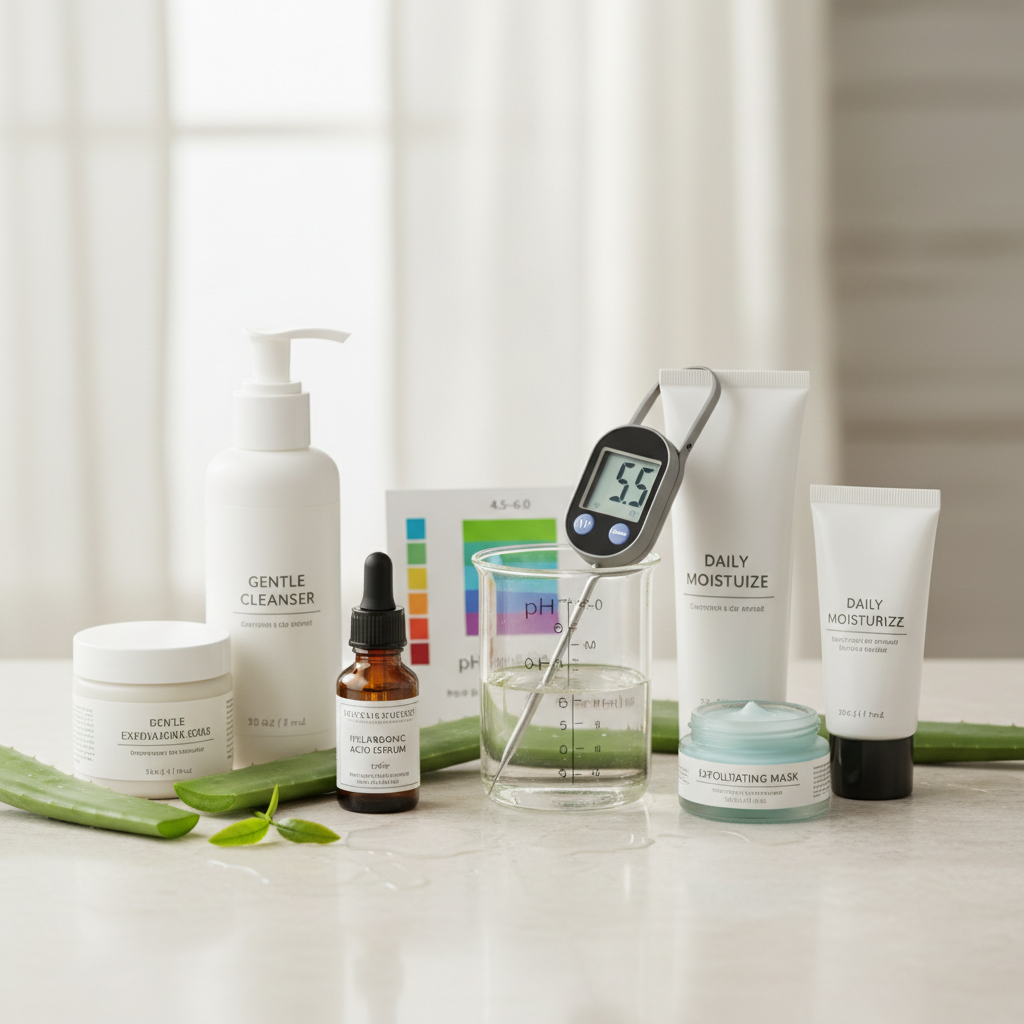
Introduction
In the evolving landscape of skincare, where buzzwords come and go, one fundamental scientific principle remains consistently vital: pH. Often overlooked in favor of flashy ingredients or celebrity endorsements, understanding pH is perhaps the single most impactful step you can take toward truly optimizing your skincare routine and achieving lasting skin health.
What is Skin pH and Why Does It Matter So Much?
Our skin isn’t just a surface; it’s a complex, living organ with its own delicate ecosystem. At the outermost layer, the stratum corneum, lies what dermatologists refer to as the “acid mantle.” This protective film, composed of sebum, sweat, amino acids, and fatty acids, naturally maintains a slightly acidic pH. Think of it as your skin’s first line of defense.
The pH scale measures how acidic or alkaline a substance is, ranging from 0 (highly acidic) to 14 (highly alkaline), with 7 being neutral. For healthy skin, the ideal pH typically sits between 4.7 and 5.7. This slightly acidic environment is crucial for several reasons:
- Barrier Function: The acid mantle acts as a physical and immunological barrier, preventing moisture loss, blocking environmental pollutants, and defending against harmful bacteria and fungi.
- Enzyme Activity: Many of the enzymes vital for healthy skin cell turnover and lipid synthesis function optimally within this acidic range.
- Microbiome Balance: It supports a healthy balance of beneficial microorganisms (the skin microbiome), which play a critical role in skin immunity and overall health.
How Does pH Imbalance Affect Your Skin?
When the skin’s pH is thrown off balance, whether by harsh products, environmental factors, or internal issues, the consequences can be significant and visible. Understanding these impacts is key to recognizing when your routine might need an adjustment.
Too Alkaline: The Most Common Culprit
Many traditional soaps and cleansers are alkaline (pH 8-10), and their regular use can strip the acid mantle. When your skin’s pH rises too high (becomes too alkaline), you might experience:
- Barrier Disruption: The skin’s protective barrier weakens, making it more permeable. This leads to increased transepidermal water loss (TEWL), resulting in dryness, flakiness, and a feeling of tightness.
- Increased Sensitivity and Irritation: A compromised barrier allows irritants and allergens to penetrate more easily, leading to redness, itching, and heightened reactivity, especially for those with already sensitive skin or conditions like rosacea.
- Acne Breakouts: An alkaline environment can disrupt the skin’s natural antimicrobial defenses, creating a more favorable breeding ground for acne-causing bacteria like P. acnes. It can also interfere with proper sebum regulation.
- Exacerbated Skin Conditions: Conditions like eczema and dermatitis often involve a disrupted skin barrier and an elevated pH, making them worse with alkaline products.
- Premature Aging: Chronic barrier damage and inflammation can accelerate collagen breakdown, contributing to fine lines and loss of elasticity over time.
Too Acidic: Less Common, but Still Problematic
While less common with everyday products (unless they are highly concentrated acids used improperly), an overly acidic environment can also cause issues:
- Irritation and Redness: Products with an excessively low pH (e.g., strong chemical peels used incorrectly) can strip the skin, leading to burning, stinging, and significant redness.
- Over-Exfoliation: While some acids are beneficial, using too many low-pH products or those that are too strong for your skin can lead to over-exfoliation, leaving the skin raw, sensitive, and vulnerable.
Impact on Different Skin Types
- Oily Skin: Often mistakenly treated with harsh, alkaline cleansers to “strip” oil. This can backfire, triggering increased oil production as the skin tries to compensate, leading to more breakouts.
- Dry Skin: Already prone to barrier dysfunction, dry skin is particularly vulnerable to alkaline products, which further deplete lipids and moisture, leading to increased tightness and flakiness.
- Sensitive Skin: This skin type benefits most from pH-balanced products, as their barrier is often already compromised and easily irritated by pH fluctuations.
- Combination Skin: Requires a balanced approach to prevent dryness in some areas and excessive oiliness in others, making pH-balanced formulations crucial for overall harmony.
- Mature Skin: As we age, the skin’s natural barrier function can weaken, and its ability to recover from pH disruption decreases. Maintaining an optimal pH supports its resilience and overall health.
What’s the Ideal pH Range for Your Skincare Products?
Given the skin’s natural slightly acidic state, it makes intuitive sense that most skincare products should align with this. The general consensus among dermatologists and cosmetic chemists is that products ideally fall within a pH range of 4.5 to 6.0, mirroring the skin’s own acidity. However, this isn’t a hard and fast rule for every single product, especially when dealing with targeted active ingredients.
pH and Specific Actives: Maximizing Efficacy and Minimizing Irritation
The pH of a product is not just about skin comfort; it’s also critical for the stability, penetration, and efficacy of many active ingredients. Here’s how pH influences some common skincare powerhouses:
- Vitamin C (L-Ascorbic Acid): This potent antioxidant requires a low pH (typically 2.5-3.5) to effectively penetrate the skin and deliver its brightening and collagen-boosting benefits. However, this low pH can be irritating for sensitive skin. Newer formulations sometimes use vitamin C derivatives (like Magnesium Ascorbyl Phosphate or Tetrahexyldecyl Ascorbate), which are more stable at higher pH levels (5.0-7.0) and generally less irritating, though often less potent.
- AHAs & BHAs (Glycolic Acid, Lactic Acid, Salicylic Acid): Alpha Hydroxy Acids (AHAs) and Beta Hydroxy Acids (BHAs) are chemical exfoliants. They are most effective at a pH of 3.0-4.0. At higher pH levels, their “free acid value” (the amount of acid available to exfoliate) decreases significantly, making them less potent. At very low pH, they can be overly irritating. Salicylic acid, a BHA, is particularly effective for oily and acne-prone skin due to its oil-solubility.
- Retinoids (Retinol, Retinal, Tretinoin): These Vitamin A derivatives are celebrated for their anti-aging and anti-acne properties. Retinol and its more potent cousin, retinal (retinaldehyde), are generally stable and effective in formulations with a pH between 5.0 and 6.5. This slightly acidic to neutral range helps maintain their stability and minimizes irritation, allowing them to convert into retinoic acid in the skin.
- Niacinamide (Vitamin B3): A versatile ingredient known for calming inflammation, improving barrier function, and reducing hyperpigmentation. Niacinamide is remarkably stable over a wide pH range, but it’s most effective and stable around pH 5.0-6.0. At very low pH, it can convert to nicotinic acid, which can cause flushing and irritation, though modern formulations usually mitigate this.
- Hyaluronic Acid: A humectant that attracts and holds moisture. Hyaluronic acid is stable and effective across a broad pH range (typically 5.0-8.0), making it an easy ingredient to formulate with and layer. Its primary role is hydration and plumping.
- Peptides: These short chains of amino acids signal the skin to produce more collagen or perform other functions. Peptides are generally stable in formulations with a pH of 5.0-7.0. Their efficacy is less pH-dependent than direct acids.
- Ceramides: Essential lipids that make up a significant portion of the skin barrier. Ceramides are typically formulated in moisturizers with a pH close to that of healthy skin (5.0-6.0) to support barrier repair and function.
- Mineral SPF (Zinc Oxide, Titanium Dioxide): Sunscreens, especially mineral ones, rely on physical blockers and are generally formulated to be pH-neutral (around 6.0-7.0) to ensure stability and broad-spectrum protection without irritating the skin. The focus in 2026 is also on consistent reapplication science for optimal protection.
How Can You Integrate pH-Optimized Products into Your Daily Routine?
Creating a pH-balanced routine isn’t about obsessively measuring every product, but rather making informed choices and understanding the general principles. Your goal is to support your skin’s natural acidity and barrier function.
Choosing Your Cleanser Wisely
This is arguably the most crucial step. Many traditional foaming cleansers are alkaline and can strip the acid mantle. Opt for:
- Low pH Cleansers: Look for cleansers explicitly labeled as “pH-balanced” or “skin-friendly pH.” These typically have a pH between 5.0-6.0. They should cleanse effectively without leaving your skin feeling tight or squeaky clean.
- Gentle Formulations: Avoid harsh sulfates and strong fragrances, which can further irritate.
Layering Products for Optimal Efficacy
The order in which you apply products matters, especially when using potent actives with specific pH requirements.
- Cleanse: Start with a low-pH cleanser.
- Targeted Treatments (Low pH): If using a Vitamin C serum (L-Ascorbic Acid) or an AHA/BHA exfoliant, apply these directly after cleansing. Allow a few minutes for them to absorb and work at their optimal pH before moving on. This allows the skin to return to its natural pH, or for the active to perform at its best.
- Serums (Skin pH): Next, apply serums containing ingredients like niacinamide, hyaluronic acid, or peptides. These are generally formulated to be closer to skin’s natural pH and can be layered without significant pH interference.
- Retinoids: If using a retinol or retinal product, apply it after your serums or directly after cleansing if you’re not using other low-pH actives. Some prefer to apply it after a light layer of moisturizer to buffer its effects, especially when starting out.
- Moisturizer: Finish with a moisturizer that is pH-balanced (typically 5.0-6.0). This step is crucial for sealing in moisture and reinforcing your skin barrier. In 2026, the focus on skin barrier health continues to be paramount, with ceramide-rich moisturizers being a staple.
- Sunscreen: Always apply a broad-spectrum mineral SPF as the final step in your morning routine. Its pH is generally less critical for efficacy but ensures protection.
“In 2026, we see a continued emphasis on understanding the skin as an ecosystem. pH balance isn’t just a trend; it’s a foundational pillar for supporting the skin barrier and maximizing the benefits of advanced actives, even those found in dermal-grade at-home tools.”
Signs Your Skincare Routine Might Be pH Imbalanced
If you’re unsure whether your current routine is working with your skin’s pH, look out for these common indicators:
- Persistent dryness, flakiness, or tightness, especially after cleansing.
- Increased sensitivity, redness, or stinging when applying products that previously didn’t bother you.
- Frequent breakouts or acne that doesn’t respond to typical treatments.
- A dull, rough, or uneven skin texture despite consistent exfoliation.
- Products feeling less effective than they used to, or actives causing more irritation than expected.
- An oily T-zone combined with dry cheeks (classic combination skin exacerbated by imbalance).
- A general feeling of discomfort or “rawness” in your skin.
Drugstore vs. Prestige: Does Price Dictate pH Balance?
A common misconception is that higher-priced prestige skincare automatically means better formulation or ideal pH. This is simply not true. Dermatologist consensus consistently emphasizes that effective skincare, including pH-balanced options, is widely available across all price points. Many drugstore brands have invested heavily in research and development, offering sophisticated formulations with FDA-approved actives and meticulously balanced pH levels.
The key is to look at the ingredients and formulation, not just the brand name or price tag. You can find excellent pH-balanced cleansers, serums, and moisturizers from both ends of the spectrum. Focus on products that explicitly state they are pH-balanced, gentle, or suitable for sensitive skin if you’re concerned. The efficacy of key actives like retinoids or vitamin C is more about their concentration and delivery system than the brand’s marketing budget.
pH Considerations for Common Skincare Product Categories
| Product Category | Ideal pH Range | Key Actives & Impact | Considerations |
|---|---|---|---|
| Cleanser | 4.5 – 6.0 | Gentle surfactants, humectants (glycerin). Maintains acid mantle, prevents stripping. | Crucial first step. Avoid “squeaky clean” feeling. Look for “pH-balanced” labels. |
| Vitamin C Serum (L-Ascorbic Acid) | 2.5 – 3.5 | L-Ascorbic Acid. Potent antioxidant, collagen booster. | Can be irritating at low pH. Consider derivatives for sensitive skin (higher pH). Apply on clean, dry skin. |
| AHA/BHA Exfoliant | 3.0 – 4.0 | Glycolic Acid, Lactic Acid, Salicylic Acid. Exfoliation, cell turnover, pore clearing. | Efficacy drops significantly at higher pH. Start slowly, avoid over-exfoliation. |
| Retinoid Serum (Retinol, Retinal) | 5.0 – 6.5 | Retinol, Retinal, Bakuchiol. Anti-aging, acne treatment, cell renewal. | Optimal stability and conversion. Layer carefully with low-pH actives; consider buffering. |
| Moisturizer | 5.0 – 6.0 | Ceramides, Hyaluronic Acid, Peptides. Barrier repair, hydration, soothing. | Seals in moisture, reinforces acid mantle. Essential for all skin types, especially after actives. |
Frequently Asked Questions
Can I test my skin’s pH at home?
While pH testing strips are available, they are generally not precise enough for accurate skincare pH measurement. Your skin’s pH can vary across different areas and fluctuate throughout the day. Instead of testing, focus on how your skin feels and responds to products. If it’s comfortable, hydrated, and free from irritation, your pH is likely in a good place.
What about water pH?
The pH of tap water can vary significantly by region, ranging from slightly acidic to quite alkaline. While rinsing with water won’t drastically alter your skin’s pH long-term if you follow up with pH-balanced products, consistently hard or alkaline water can contribute to dryness and barrier disruption over time. Using a gentle, pH-balanced cleanser helps to counteract this effect.
Should I avoid all alkaline products?
Not necessarily all, but certainly most for daily use. While a very occasional alkaline product (like a clay mask) might be used for specific purposes, consistent use of high-pH cleansers or treatments can disrupt your skin’s barrier. The general rule is to prioritize slightly acidic to neutral products for routine care to support your skin’s natural balance.
How do I know if a product’s pH is right for me?
The best indicator is your skin’s response. If a product leaves your skin feeling tight, dry, irritated, or causes breakouts, its pH might be off for you, or it might contain other irritating ingredients. Look for products labeled “pH-balanced,” “gentle,” or “for sensitive skin.” Many brands also disclose the pH of their products, especially for actives like Vitamin C or AHAs.
Is it okay to layer products with very different pH levels?
Yes, but with some strategic considerations. For example, a low-pH Vitamin C serum can be used effectively before a higher-pH moisturizer. The key is to allow sufficient absorption time (5-15 minutes) between products, especially if one is a strong active with a very low pH. This allows the skin’s natural buffering capacity to kick in and the first product to exert its effect before the next is applied, minimizing potential irritation or inactivation.
Conclusion
Understanding and respecting your skin’s natural pH is not just a trend; it’s a foundational pillar of effective skincare. By choosing pH-balanced cleansers, strategically layering active ingredients, and listening to your skin’s signals, you can maintain a robust skin barrier, support a healthy microbiome, and unlock the full potential of your skincare routine. Prioritizing pH ensures your skin remains resilient, healthy, and radiant for years to come.