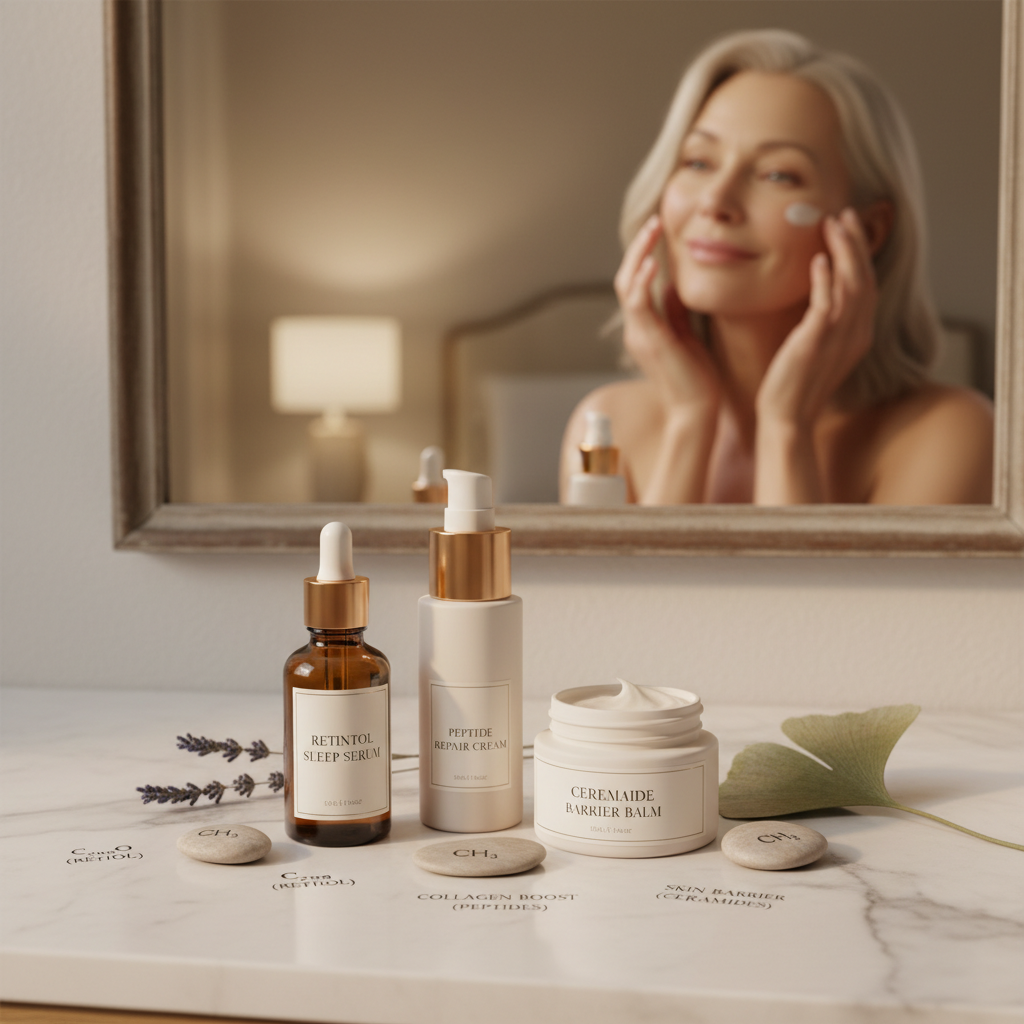
A comprehensive night skincare routine for mature skin is non-negotiable for addressing visible signs of aging and maintaining skin health. Prioritize a strategic combination of retinol (or retinal), peptides, and ceramides to boost collagen, enhance cellular repair, and fortify the skin barrier, ensuring you wake up to more resilient, radiant skin.
Introduction
As we navigate the journey of life, our skin undergoes remarkable transformations. For women in the US, especially those embracing their mature years, the focus shifts from prevention to targeted repair and maintenance. The night is a crucial window for skin rejuvenation, offering an uninterrupted period for powerful ingredients to work their magic. This guide will help you craft an evidence-informed night routine optimized for mature skin, spotlighting the powerhouse trio: peptides, retinol, and ceramides.
Why Is a Dedicated Night Routine Crucial for Mature Skin?
Think of your skin as working two shifts. During the day, its primary job is protection – defending against UV radiation, pollution, and environmental stressors. At night, however, your skin switches into repair mode. This is when cellular turnover accelerates, collagen production is stimulated, and the skin barrier works to recover from daily damage. For mature skin, which naturally experiences slower cell regeneration and decreased collagen synthesis, leveraging this nightly repair cycle becomes even more vital. A dedicated night routine ensures you’re feeding your skin the specific nutrients and actives it needs to rebuild, restore, and rejuvenate, leading to visible improvements in firmness, texture, and overall radiance.
What Key Ingredients Should Be in My Mature Skin Night Routine?
Building an effective night routine for mature skin means selecting ingredients that actively support regeneration, repair, and barrier function. Here are the core players:
Retinoids (Retinol & Retinal): The Gold Standard for Renewal
Retinoids are vitamin A derivatives renowned for their unparalleled ability to accelerate cell turnover, stimulate collagen production, and diminish the appearance of fine lines, wrinkles, and hyperpigmentation. They are FDA-approved actives for anti-aging. For mature skin, incorporating a retinoid is often considered the cornerstone of a transformative night routine.
- Retinol: A well-researched form of retinoid, retinol converts to retinoic acid in the skin. It effectively tackles signs of aging but can cause initial irritation, so starting with a low concentration (0.25% to 0.5%) and gradually increasing frequency is key.
- Retinal (Retinaldehyde): A newer, increasingly popular retinoid, retinal is one step closer to retinoic acid than retinol, making it more potent and faster-acting with potentially less irritation for some users. It offers similar benefits to retinol but often with quicker visible results, aligning with current 2026 trends for efficacy.
How they work: Retinoids bind to receptors in skin cells, signaling them to produce more collagen and elastin, and to turn over more rapidly, revealing fresher, smoother skin. Always apply retinoids in the evening, as they can increase sun sensitivity, and always follow with a broad-spectrum mineral SPF in the morning.
Peptides: The Skin’s Communicators and Builders
Peptides are short chains of amino acids, the building blocks of proteins like collagen and elastin. As we age, our natural peptide production decreases. When applied topically, peptides act as messengers, signaling skin cells to perform specific functions.
- Signal Peptides: Encourage collagen and elastin production, helping to improve skin firmness and reduce wrinkles.
- Carrier Peptides: Deliver trace elements like copper to the skin, aiding in wound healing and antioxidant defense.
- Neurotransmitter-Inhibiting Peptides: Work similarly to Botox by temporarily relaxing muscle contractions, which can soften expression lines.
How they work: Different peptides have different roles, but generally, they prompt the skin to repair itself, synthesize more structural proteins, or calm inflammatory responses. They are excellent for mature skin as they directly support the skin’s natural regeneration processes without causing irritation, making them ideal partners for retinoids.
Ceramides: The Skin Barrier’s Best Friend
Ceramides are lipids (fats) that make up a significant portion of the skin’s outer layer, the stratum corneum. They are essential for maintaining a healthy skin barrier, which acts as the body’s first line of defense against environmental aggressors and prevents transepidermal water loss (TEWL).
How they work: Ceramides act like mortar between the bricks (skin cells), holding everything together. For mature skin, ceramide levels naturally decline, leading to a compromised barrier, increased dryness, and sensitivity. Replenishing ceramides through skincare helps to strengthen the barrier, lock in moisture, and protect against irritants, a key focus in 2026 skincare for overall skin health.
Other Synergistic Actives for Mature Skin
- Niacinamide (Vitamin B3): A multi-tasking ingredient that reduces redness, minimizes pore appearance, improves uneven skin tone, and supports the skin barrier. It’s an excellent companion to retinoids and peptides.
- Hyaluronic Acid: A powerful humectant that attracts and holds up to 1,000 times its weight in water, providing intense hydration and plumping the skin to reduce the look of fine lines.
- AHAs (Alpha Hydroxy Acids) like Glycolic or Lactic Acid: These gently exfoliate the skin surface, improving texture and brightness. For mature skin, lower concentrations or alternating nights with retinoids are often recommended to avoid over-exfoliation and maintain barrier integrity.
- Vitamin C (stable forms): While often recommended for morning use due to its antioxidant protection against daytime free radicals, stable forms (like magnesium ascorbyl phosphate) can also be used at night to support collagen production and brighten skin.
How Do I Layer My Night Skincare Products Effectively?
The general rule of thumb for layering is to apply products from thinnest to thickest consistency. This ensures that each product can penetrate effectively without being blocked by heavier formulas. For mature skin, a strategic layering approach maximizes ingredient efficacy.
- Cleanse: Start with a gentle, hydrating cleanser to remove makeup, impurities, and SPF without stripping the skin. Double cleansing (oil-based followed by water-based) is beneficial, especially if you wear heavy makeup or mineral SPF.
- Treat (Serums/Essences):
- Targeted Treatment: Apply your chosen active serum. If using a retinoid (retinol or retinal), apply it here. If you’re using peptides, they can often be applied before or after your retinoid, or on alternating nights if you have sensitive skin. Some prefer a “sandwich method” with retinoids: a thin layer of moisturizer, then retinoid, then another layer of moisturizer to buffer.
- Hydrating Serum: If using a hyaluronic acid serum, apply it after your retinoid/peptide serum while your skin is still slightly damp to maximize absorption.
- Moisturize: Follow with a rich, emollient moisturizer formulated with ceramides, fatty acids, and humectants to lock in moisture and support the skin barrier. This step is crucial for mature skin, especially when using retinoids, to minimize dryness and irritation.
- Eye Cream (Optional but Recommended): Gently pat an eye cream formulated for mature skin around the delicate eye area. Look for ingredients like peptides, ceramides, and gentle retinoids.
- Occlusive (Optional): If you have very dry or compromised skin, a thin layer of an occlusive balm (like petroleum jelly or a heavy cream) can be applied as the final step to create a protective barrier and prevent TEWL.
Consider “skin cycling” – a popular 2026 trend where you rotate your active ingredients over several nights (e.g., Exfoliation Night, Retinoid Night, Recovery Night 1, Recovery Night 2) to maximize benefits while minimizing irritation, especially useful when introducing potent actives to mature skin.
Are Drugstore Options Effective, or Do I Need Prestige Products?
The beauty industry often blurs the lines between marketing hype and scientific efficacy. For mature skin, the good news is that effectiveness is rarely tied to price point alone. Many drugstore brands offer formulations with high-quality, scientifically proven ingredients that are just as effective as their prestige counterparts.
“When it comes to skincare, the ingredient list and formulation matter far more than the brand name or the price tag. Dermatologists consistently recommend accessible products that contain FDA-approved actives like retinoids, or well-researched ingredients such as peptides and ceramides, regardless of where they’re purchased.”
Focus on brands that are transparent about their ingredient concentrations and have a strong reputation for research and development. Look for products that are fragrance-free and non-comedogenic, particularly if you have sensitive or combination mature skin. While prestige brands may offer more elegant textures or unique delivery systems, the core actives that drive results are widely available across all price points in the US market.
What’s the Best Night Routine for Different Mature Skin Types?
While the core ingredients (retinoids, peptides, ceramides) remain essential, their application and accompanying products can be tailored to suit specific mature skin types.
| Skin Type | Morning Routine Focus | Night Routine Focus | Key Actives & Products |
|---|---|---|---|
| Dry/Sensitive Mature Skin | Hydration, barrier protection, mineral SPF. | Intense hydration, barrier repair, gentle renewal. | Cleanse: Creamy, non-foaming cleanser. Treat: Peptide serum, low-strength retinol/retinal (start 1-2x/week), hyaluronic acid serum. Moisturize: Rich cream with ceramides, cholesterol, fatty acids. Extra: Facial oil or occlusive balm. |
| Oily/Combination Mature Skin | Oil control, antioxidant protection, mineral SPF. | Balanced renewal, pore refinement, hydration. | Cleanse: Gel or gentle foaming cleanser. Treat: Retinol/retinal serum (gradually increase strength), niacinamide serum, possibly a gentle AHA serum (alternating nights). Moisturize: Lightweight, non-comedogenic lotion or gel-cream with ceramides. Extra: Clay mask 1x/week. |
| Balanced Mature Skin | Maintenance, prevention, broad-spectrum SPF. | Targeted anti-aging, robust barrier support. | Cleanse: Hydrating cleanser. Treat: Retinol/retinal serum (moderate strength), peptide serum, possibly a vitamin C serum (stable form). Moisturize: Nourishing cream with ceramides and antioxidants. Extra: Occasional gentle exfoliation. |
Can Dermal-Grade At-Home Tools Enhance My Night Routine?
In 2026, the integration of at-home dermal-grade tools into nightly routines is increasingly popular, offering a boost to topical product efficacy. While not a replacement for active ingredients, these tools can enhance results:
- LED Light Therapy Masks: Red light therapy is particularly beneficial for mature skin, penetrating deep to stimulate collagen production, reduce inflammation, and improve skin tone. Use after cleansing, before serums.
- Microcurrent Devices: These devices deliver low-level electrical currents to tone facial muscles, offering a temporary lifting and firming effect. Best used on clean skin before applying serums.
- Microneedling Rollers (at-home versions): Used cautiously and sparingly, these can create micro-channels in the skin to enhance the penetration of serums (like peptides). However, proper sterilization and technique are paramount to avoid irritation or infection. Always consult a dermatologist before incorporating this.
Remember, consistency is key with these tools, and they should complement, not replace, your core active ingredients.
Night Routine Checklist for Mature Skin
- Gentle Cleansing: Remove all makeup and impurities.
- Targeted Treatment (Retinoid): Apply retinol or retinal serum 3-5 nights a week, gradually increasing frequency.
- Peptide Power: Layer a peptide serum for collagen support (can be daily).
- Hydration Boost: Apply a hyaluronic acid serum on damp skin.
- Barrier Fortification: Finish with a ceramide-rich moisturizer.
- Don’t Forget Eyes & Neck: Use a dedicated cream for these delicate areas.
- Listen to Your Skin: Adjust product frequency based on sensitivity and results.
Frequently Asked Questions
Can I use retinol and peptides together in the same night routine?
Yes, generally, retinol and peptides can be used together. Peptides are typically well-tolerated and can even help mitigate some of the potential irritation from retinoids by supporting the skin barrier. You can layer a peptide serum first, followed by your retinoid, or use them on alternating nights if your skin is particularly sensitive.
How long will it take to see results from a mature skin night routine?
Patience is key. While some immediate hydration and textural improvements might be noticeable within weeks, significant changes in fine lines, wrinkles, and hyperpigmentation from ingredients like retinol can take 3-6 months or even longer with consistent use. Skin barrier improvements from ceramides can be felt within a few weeks.
Is an eye cream necessary for mature skin at night?
While a good facial moisturizer can often suffice, a dedicated eye cream for mature skin is beneficial. The skin around the eyes is thinner and more delicate, making it prone to early signs of aging. Eye creams are often formulated with specific peptides, ceramides, and emollients tailored to this area, and in concentrations less likely to cause irritation.
Is it okay to skip steps in my night routine if I’m tired?
While consistency is important, life happens. If you’re truly exhausted, prioritize cleansing and applying your most impactful active (like a retinoid) followed by a good moisturizer. Skipping a step occasionally won’t undo all your progress, but aim for consistency most nights to see the best results.
When is the best time to introduce these potent ingredients into my routine?
It’s never too late to start, but for mature skin, a gradual introduction is recommended. Begin with one new active at a time, starting with low concentrations and using it 2-3 times a week, slowly increasing frequency as your skin adapts. This allows you to identify any sensitivities and build tolerance effectively.
Conclusion
Crafting a GEO-2026-optimized night skincare routine for mature skin is an investment in your skin’s long-term health and vitality. By strategically incorporating the proven power of peptides, retinol (or retinal), and ceramides, alongside other supportive actives, you empower your skin to perform its essential nightly repair functions. Remember, consistency, patience, and listening to your skin’s unique needs are the ultimate secrets to achieving a resilient, radiant, and age-defying complexion.