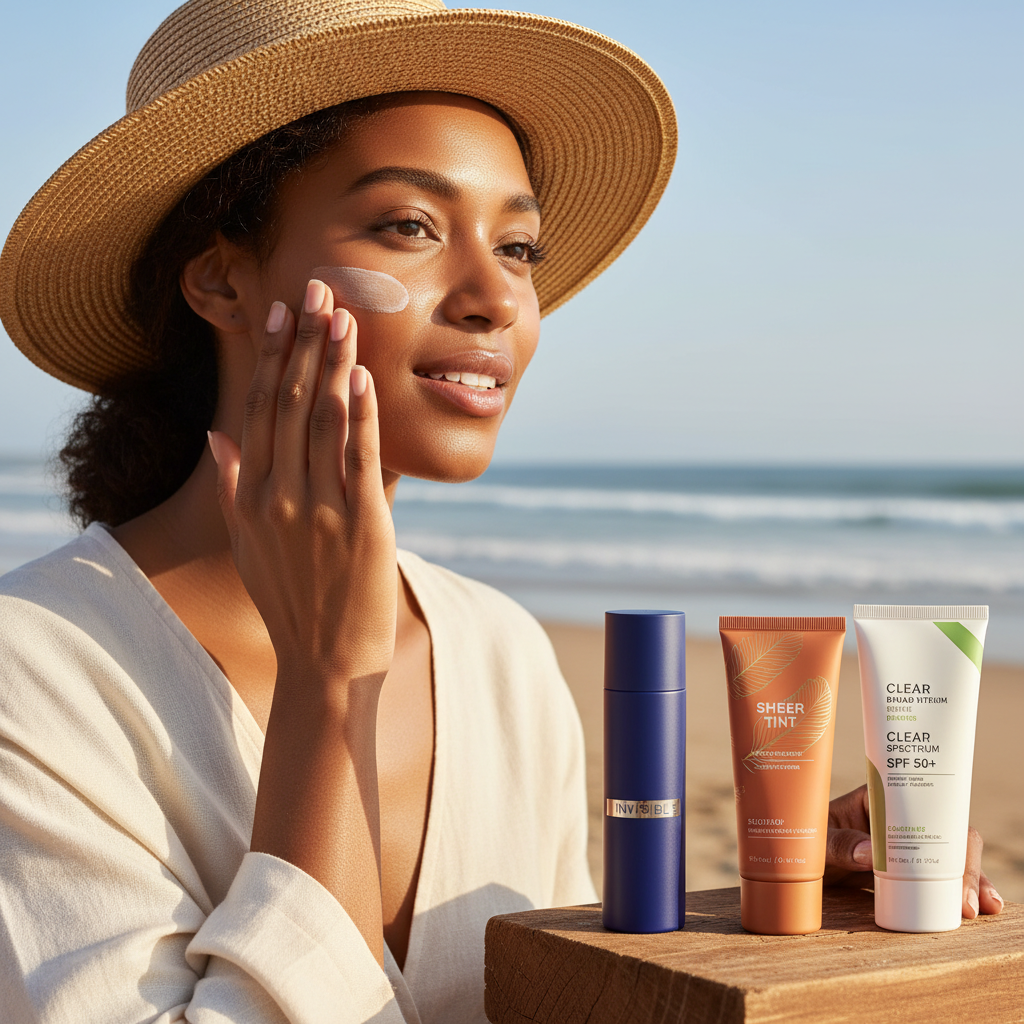
For women with darker skin tones, finding a sunscreen that provides robust protection without leaving a noticeable white cast is no longer a challenge. The solution lies in choosing advanced chemical sunscreens, next-generation micronized or encapsulated mineral formulas, or expertly formulated tinted options that blend seamlessly into your complexion. Prioritize broad-spectrum SPF 30 or higher and look for labels like “invisible,” “clear,” or “sheer” to ensure a flawless finish.
Introduction
In 2026, the conversation around skincare has evolved significantly, with a greater emphasis on inclusivity, efficacy, and evidence-based solutions. For too long, the experience of women with darker skin tones has been overlooked in the sunscreen market, leading to frustration with chalky, ashy finishes. This article cuts through the noise to provide a definitive guide on how to find sunscreens that offer superior protection while remaining utterly undetectable on your skin.
Why is “White Cast” a Bigger Concern for Darker Skin Tones?
The dreaded white cast isn’t just an aesthetic inconvenience; it’s a barrier to consistent sunscreen use, particularly for individuals with melanin-rich skin. When traditional sunscreens, especially those relying on mineral filters, are applied to darker complexions, the fine white particles can sit on the skin’s surface, creating a visible, often ashy or purple-tinged residue. This effect is significantly more pronounced on darker skin because of the contrast with the underlying melanin, making the white film stand out rather than blending in. It’s a common and valid complaint that has historically discouraged many from prioritizing daily sun protection, despite the critical importance of preventing sun damage, hyperpigmentation, and skin cancer across all skin types.
What’s the Difference Between Mineral and Chemical Sunscreens, and Why Does it Matter for White Cast?
Understanding the fundamental differences between mineral and chemical sunscreens is key to navigating the white cast dilemma. Both types offer effective broad-spectrum protection, but they achieve it through distinct mechanisms and ingredient profiles.
Mineral Sunscreens: The Traditional Culprit
Mineral sunscreens, often called physical sunscreens, use naturally occurring minerals to create a physical barrier on the skin’s surface. The primary active ingredients are usually Zinc Oxide and Titanium Dioxide. These compounds work by reflecting and scattering UV rays away from the skin, much like tiny mirrors. Historically, these particles were larger, making them highly effective but also highly visible, especially on darker skin tones, leading to the characteristic white cast. While generally considered gentle and suitable for sensitive skin, their traditional formulations were the primary source of frustration for many. However, advancements in particle technology have led to micronized (smaller particles) and even encapsulated versions that are far less visible.
Chemical Sunscreens: The Invisible Shield
Chemical sunscreens, on the other hand, work by absorbing UV radiation and converting it into heat, which is then released from the skin. These formulas typically contain organic (carbon-based) compounds such as Avobenzone, Oxybenzone (though its use is declining due to environmental and health concerns, with many brands opting for alternatives), Octinoxate, Octisalate, and Homosalate. Because these ingredients are absorbed into the skin rather than sitting on top of it, they tend to be completely transparent upon application, making them a popular choice for darker skin tones seeking an invisible finish. Newer generation chemical filters, often found in European and Asian markets but increasingly influencing US formulations, offer even more advanced photostability and broad-spectrum protection with excellent cosmetic elegance.
Which Sunscreen Ingredients and Formulas Deliver Invisible Protection for Deeper Complexions?
The good news is that advancements in cosmetic chemistry mean you no longer have to compromise between effective sun protection and an invisible finish. Here’s what to look for:
The Rise of Advanced Chemical Filters
For a truly transparent finish, chemical sunscreens are often the go-to. Modern formulations leverage a sophisticated blend of filters that provide superior broad-spectrum protection without any visible residue. Look for products featuring a combination of FDA-approved filters like Avobenzone (for UVA protection), Octinoxate, Octisalate, and Homosalate (for UVB protection). In 2026, you’ll increasingly see US brands incorporating filters popular in other markets, such as Tinosorb S & M and Mexoryl SX & XL, known for their excellent stability, broad-spectrum coverage, and non-whitening properties. While the FDA approval process for new filters in the US can be slow, many brands are using existing approved filters in innovative, cosmetically elegant ways.
Micronized and Encapsulated Mineral Formulas
If you prefer mineral sunscreens for their gentle nature, don’t despair. The industry has made significant strides. Seek out formulas that explicitly state they use “micronized” or “nano” Zinc Oxide and Titanium Dioxide. These smaller particles are much less likely to leave a white cast. Another innovation is “encapsulated” mineral filters, where the active particles are coated to improve spreadability and transparency. Tinted mineral sunscreens are also an excellent option; they use iron oxides to add a subtle tint that helps neutralize any potential white cast and can even out skin tone. Ensure the tint matches your complexion closely.
Hybrid Formulations
A growing trend is the hybrid sunscreen, which combines both chemical and mineral filters. These formulations aim to harness the best of both worlds: the broad-spectrum efficacy and gentleness of minerals with the cosmetic elegance and invisible finish of chemical filters. They can be a fantastic compromise for those who want some mineral protection but struggle with the white cast of purely mineral options.
How Can I Choose the Right Sunscreen for My Skin Type and Lifestyle?
Beyond the white cast, your skin type and daily activities should influence your sunscreen choice. The best sunscreen is one you’ll actually use consistently.
For Oily or Acne-Prone Skin
If your skin tends to be shiny or breakout-prone, look for sunscreens labeled “oil-free,” “non-comedogenic,” “gel,” “fluid,” or “mattifying.” These often have lighter textures that won’t exacerbate oiliness or clog pores. Ingredients like Niacinamide can help regulate oil production and reduce inflammation, while Salicylic Acid (a BHA) can gently exfoliate and keep pores clear. Many brands now offer serum-like or water-based sunscreens that feel weightless.
For Dry or Mature Skin
Dry and mature skin types benefit from richer, more hydrating sunscreen formulas. Look for lotions, creams, or even oil-based sunscreens that offer additional moisturizing benefits. Key hydrating ingredients to seek out include Hyaluronic Acid for moisture retention, Ceramides to support the skin barrier, and Peptides to promote collagen production and elasticity. Many sunscreens for mature skin also incorporate antioxidants like Vitamin C to combat environmental damage and brighten the complexion.
For Sensitive Skin
Individuals with sensitive skin often fare well with mineral sunscreens (Zinc Oxide and Titanium Dioxide) as they are less likely to cause irritation compared to some chemical filters. However, modern chemical formulations are increasingly gentle. Always opt for “fragrance-free” and “dye-free” options, and consider doing a patch test before full application. Look for formulas with minimal ingredients to reduce the chance of reaction.
Everyday Use vs. Outdoor Activities
For daily wear, an SPF 30 broad-spectrum sunscreen is generally sufficient. If you’re engaging in outdoor sports, swimming, or spending extended time in the sun, opt for a “water-resistant” or “very water-resistant” sunscreen with an SPF of 50 or higher. Remember that “water-resistant” doesn’t mean waterproof; reapplication is crucial after sweating or swimming, typically every 40 or 80 minutes, as indicated on the product label. The science of sunscreen reapplication in 2026 emphasizes generous and frequent application for optimal protection.
| Sunscreen Formulation Type | Key Filters/Characteristics | Best For | Pros for Darker Skin | Cons (General) |
|---|---|---|---|---|
| Advanced Chemical Gel/Serum | Avobenzone, Octinoxate, Octisalate (often combined with newer EU/Asian filters in US-influenced products) | Oily, combination, everyday wear, makeup primer | Completely transparent, lightweight, absorbs quickly, excellent under makeup. | Some chemical filters can be irritating for very sensitive skin; potential environmental concerns for some older filters. |
| Micronized Mineral Fluid (Tinted) | Micronized Zinc Oxide, Titanium Dioxide, Iron Oxides (for tint) | Sensitive, dry, mature, desire for light coverage | Minimal to no white cast due to small particles and tint; gentle; offers light skin tone evening. | May require careful shade matching; can feel slightly heavier than chemical gels. |
| Hybrid Lightweight Lotion | Combination of chemical filters (e.g., Avobenzone) and micronized mineral filters (e.g., Zinc Oxide) | All skin types, daily use, balanced protection | Balances the transparency of chemical with the gentleness of mineral; often hydrating and blends well. | Finding the perfect balance can be tricky; some may still prefer pure chemical or mineral. |
| “Invisible” Mineral Stick/Balm | Non-nano or micronized Zinc Oxide, Titanium Dioxide in a balm base | Targeted reapplication, travel, dry patches, sensitive areas | Often glides on clear, convenient for on-the-go touch-ups, very gentle. | Can be difficult to apply a uniform layer for full face; may feel heavier for oily skin. |
What Are the Key Considerations When Integrating Sunscreen into My 2026 Skincare Routine?
Sunscreen isn’t an afterthought; it’s the cornerstone of any effective skincare routine, especially when you’re using potent actives. In 2026, the focus on skin barrier health means understanding how sunscreen interacts with other products is more important than ever.
When incorporating sunscreen, always apply it as the last step in your morning routine, after all your serums and moisturizers. This ensures it forms the outermost protective layer. If you’re using powerful actives like Retinol (or its more potent cousin, Retinal), Vitamin C, or AHAs (like Glycolic or Lactic Acid), daily broad-spectrum sunscreen is non-negotiable, as these ingredients can increase skin’s photosensitivity. Allow your skincare products to fully absorb before applying sunscreen to prevent pilling. Remember, dermal-grade at-home tools, while popular, also necessitate diligent sun protection, as many procedures can make skin more vulnerable to UV damage.
- Apply Generously: Use about a nickel-sized amount for your face and neck to achieve the stated SPF. Don’t skimp!
- Layer Correctly: Sunscreen is always the final step in your morning skincare routine, after moisturizers and serums.
- Allow Absorption: Give your sunscreen a few minutes to set before applying makeup to prevent pilling and ensure even protection.
- Reapply Diligently: Reapply every two hours, or immediately after swimming or excessive sweating, even with water-resistant formulas.
- Don’t Forget Exposed Areas: Extend sunscreen to your ears, neck, chest, and hands.
- Consider Tinted Formulas: For a subtle complexion-evening effect, tinted sunscreens can be a game-changer for darker skin tones.
- Patch Test New Products: Especially if you have sensitive skin, test a new sunscreen on a small area first to check for irritation or white cast.
Frequently Asked Questions
Is a higher SPF always better for darker skin tones?
While SPF 30 blocks about 97% of UVB rays and SPF 50 blocks about 98%, the difference is marginal. For daily use, SPF 30 broad-spectrum is generally sufficient. However, for extended sun exposure or if you have a history of hyperpigmentation, an SPF 50 or higher can offer a slightly greater margin of error and peace of mind.
Can darker skin tones get sunburned or develop skin cancer?
Absolutely. While melanin provides some natural protection, it is not equivalent to sunscreen. Darker skin tones can and do get sunburned, develop sun damage, hyperpigmentation, and are susceptible to all forms of skin cancer, including melanoma. In fact, skin cancers in darker skin tones are often diagnosed at later, more dangerous stages due to a misconception that they are immune to sun damage.
How often should I reapply sunscreen, especially with makeup?
The general recommendation is to reapply every two hours, or more frequently if sweating or swimming. Over makeup, options like sheer setting sprays with SPF, translucent SPF powders, or even a beauty blender to gently pat a thin layer of liquid sunscreen can work. The key is to find a method that you’ll consistently use.
Are “invisible” sunscreens truly invisible on all darker skin tones?
Many advanced chemical and new-generation mineral sunscreens are indeed formulated to be invisible on a wide range of darker skin tones. However, individual skin undertones and the specific formulation can sometimes lead to a very subtle difference. Reading reviews from individuals with similar complexions can be helpful, and always patch test if possible.
What about sunscreen sticks or powders for reapplication?
Sunscreen sticks and powders are excellent for on-the-go reapplication, especially over makeup. They are convenient and often leave a matte finish. However, it can be challenging to apply a truly uniform and sufficient layer to achieve the stated SPF. They are best used as supplementary protection or for touch-ups, rather than your primary morning application.
Conclusion
The days of tolerating a ghostly white cast in the name of sun protection are firmly behind us. In 2026, the skincare market offers an abundance of expertly formulated sunscreens designed to provide invisible, broad-spectrum protection for every shade of darker skin. By understanding the differences between mineral and chemical filters, seeking out advanced formulations, and considering your unique skin needs, you can confidently embrace daily sun protection as the non-negotiable, beautiful step it truly is.