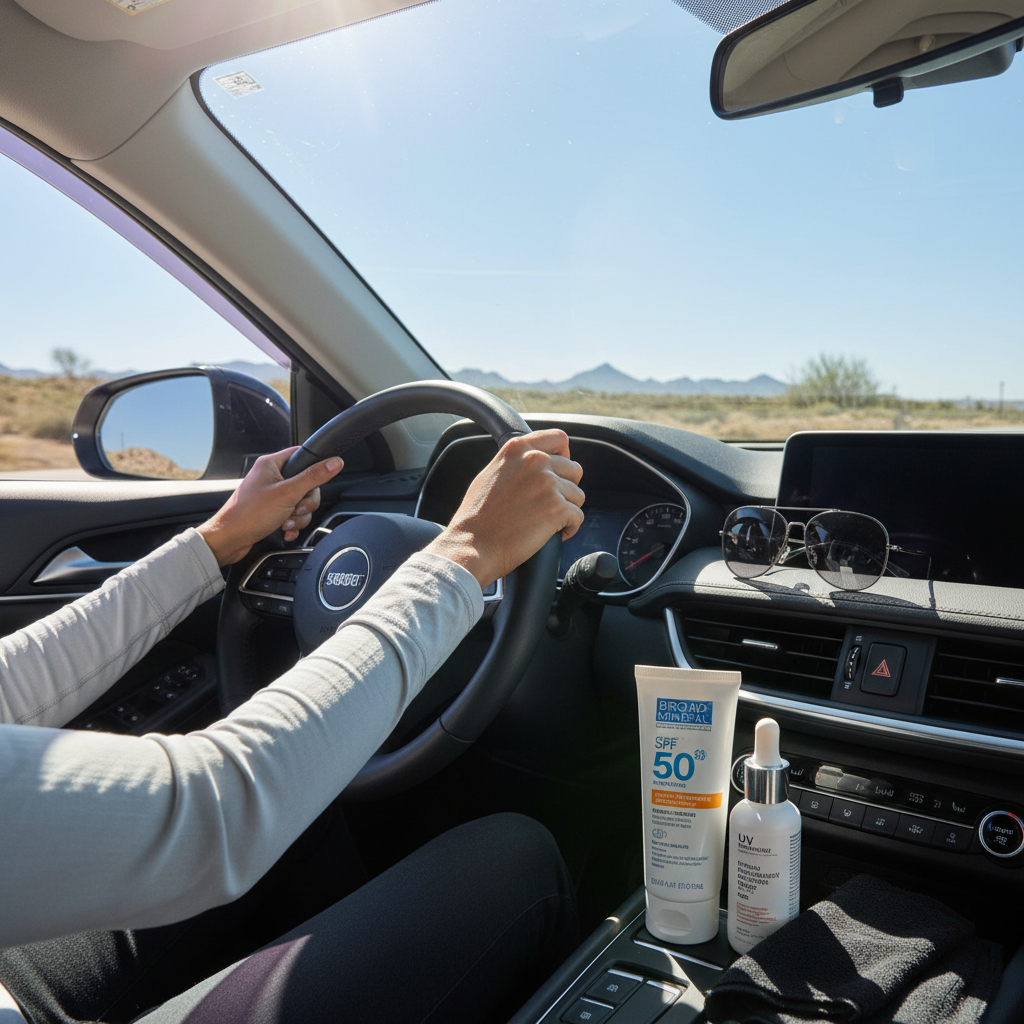
Protecting your skin from sun damage while driving in the US requires a multi-faceted approach: consistently apply broad-spectrum mineral SPF 30+ or higher, reapply diligently on longer journeys, and supplement with physical barriers like UV-protective window film, UPF clothing, and effective sunglasses. Post-exposure, incorporate reparative actives like retinoids and antioxidants to mitigate existing damage and strengthen skin health.
Introduction
For many women across the United States, driving is an inescapable part of daily life, whether it’s the morning commute, school drop-offs, or a weekend road trip. What often goes unnoticed, however, is the significant and cumulative sun exposure our skin endures behind the wheel. Standard car windows block most UVB rays, but UVA rays, notorious for accelerating skin aging and contributing to skin cancer, penetrate glass with alarming ease. This article will equip you with expert, evidence-informed strategies to safeguard your skin from the unique challenges of in-car sun exposure in 2026.
Why is driving a unique sun exposure risk for US women?
The interior of your car might feel like a safe haven, but it’s a zone of hidden sun exposure. Unlike direct outdoor sunlight, which delivers a mix of UVA and UVB, car windows predominantly filter out UVB, the rays primarily responsible for sunburn. However, UVA rays, which contribute to photoaging (wrinkles, fine lines, sunspots, and loss of elasticity) and increase the risk of skin cancer, pass through untreated glass virtually unimpeded. Research consistently shows a higher incidence of sun damage and even skin cancers, particularly squamous cell carcinomas, on the left side of the face, neck, and arms of drivers in the US.
The Difference Between UVA and UVB in Your Car
- UVA Rays: These longer wavelength rays penetrate deeper into the skin, contributing to collagen breakdown, elastin damage, and the formation of free radicals. They are present year-round, even on cloudy days, and pass through glass.
- UVB Rays: These shorter wavelength rays are the primary cause of sunburn and superficial skin damage. While most car glass blocks a significant portion of UVB, it’s not 100% effective, especially with older or unlaminated windows.
The cumulative effect of daily, seemingly innocuous exposures adds up over time, manifesting as uneven skin tone, texture changes, and a visible disparity between the driver’s side and passenger’s side of the face. Understanding this unique risk is the first step toward effective protection.
What’s the optimal daily skincare routine for driving sun protection?
A robust daily skincare routine is your primary defense against incidental sun exposure, especially for those frequent short drives. Think of it as creating a protective shield that works proactively and reactively.
Morning Routine: Build Your Shield
- Gentle Cleansing: Start with a mild cleanser to remove overnight impurities without stripping your skin barrier.
- Antioxidant Serum: Apply a potent antioxidant serum, ideally one containing Vitamin C (L-Ascorbic Acid). Vitamin C is a powerful antioxidant that neutralizes free radicals generated by UV radiation and pollution, brightens skin, and supports collagen production. It also enhances the efficacy of your sunscreen.
- Hydrating Moisturizer: Follow with a moisturizer suitable for your skin type (oily, dry, combination, sensitive, mature) to support a healthy skin barrier. Look for ingredients like Ceramides and Hyaluronic Acid, which are crucial for maintaining hydration and barrier integrity.
- Broad-Spectrum SPF 30+ (Non-Negotiable): This is your most critical step. Apply a generous amount of broad-spectrum sunscreen with an SPF of 30 or higher to all exposed skin, including your face, neck, chest, and hands. Mineral sunscreens (containing Zinc Oxide and/or Titanium Dioxide) are often preferred for their immediate physical barrier and suitability for sensitive skin.
Reapplication Strategies for Longer Drives
For extended driving periods (over two hours), reapplication is key. Sunscreen efficacy diminishes over time due to sweat, friction, and environmental factors. Keep convenient reapplication options in your car:
- SPF Sticks: Great for quick, mess-free touch-ups on the face and neck.
- SPF Powders: Excellent for reapplying over makeup, providing a matte finish and additional protection.
- SPF Sprays: Can be useful for arms and hands, ensuring even coverage. Choose non-aerosol options to minimize inhalation and ensure adequate product delivery.
Evening Routine: Repair and Restore
The evening is when your skin focuses on repair. Incorporate ingredients that help undo the day’s environmental damage:
- Double Cleansing: Especially if you wore makeup or a heavy mineral sunscreen, a double cleanse (oil-based cleanser followed by a water-based cleanser) ensures all residues are removed.
- Treatment Serum (Retinoids): Introduce a retinoid like Retinol or its more potent cousin, Retinal (Retinaldehyde). Retinoids are gold-standard ingredients for anti-aging, promoting cell turnover, stimulating collagen, and fading hyperpigmentation. Start slowly to build tolerance, especially if you have sensitive skin.
- Niacinamide Serum: Niacinamide (Vitamin B3) is a versatile active that calms inflammation, reduces redness, minimizes pore appearance, improves skin barrier function, and helps with hyperpigmentation. It pairs well with retinoids.
- Nourishing Moisturizer: Finish with a rich moisturizer containing ingredients like Ceramides, Peptides (which support collagen and elastin), and antioxidants to support skin repair and hydration overnight.
Which types of sunscreens offer the best defense against driving sun damage?
Choosing the right sunscreen is paramount. The FDA-approved active ingredients broadly fall into two categories: mineral and chemical. For driving, the focus should always be on broad-spectrum protection.
| Sunscreen Type/Form | Pros for Driving | Cons for Driving | Ideal Skin Type |
|---|---|---|---|
| Mineral Lotion (Zinc Oxide/Titanium Dioxide) | Immediate broad-spectrum protection (UVA/UVB), less irritating for sensitive skin, great for daily base. Often tinted to minimize white cast and offer visible light protection. | Can sometimes leave a white cast, may feel thicker on skin, requires thorough blending. | All, especially Sensitive, Acne-Prone, Mature |
| Chemical Gel/Lotion (Avobenzone, Octinoxate, etc.) | Lightweight, often cosmetically elegant, no white cast, blends easily. Good for daily wear under makeup. | Requires 15-20 min to activate, can be irritating for very sensitive skin, certain filters may be less photostable. | Normal, Oily, Combination |
| Tinted Mineral Stick (Zinc Oxide/Titanium Dioxide) | Convenient for reapplication on-the-go, portable, targeted application, provides a sheer tint for evening out skin tone. | Can feel heavy if layered excessively, limited shade range for tint, may tug on skin during application. | Normal, Dry, Combination, for targeted reapplication |
| SPF Powder (Mineral) | Excellent for reapplication over makeup, mattifying, convenient, provides a physical barrier. | May not provide sufficient primary protection if used alone, can be tricky to ensure even coverage. | Oily, Combination, for reapplication over makeup |
Key Considerations for Driving Sunscreens:
- Broad-Spectrum: Always look for this label, ensuring protection against both UVA and UVB rays.
- SPF 30+: This is the minimum recommendation. For longer drives or extended periods in the car, an SPF 50+ provides enhanced protection.
- Water Resistance: While not strictly for swimming, a water-resistant formula can withstand sweat and humidity, which can be a factor during long drives or in warmer climates.
- Tinted Formulas: Many mineral sunscreens now come with a tint, often using iron oxides. These not only help negate the white cast but also offer additional protection against visible light, which emerging research suggests can also contribute to hyperpigmentation.
How can you boost your sun protection beyond sunscreen in the car?
While sunscreen is foundational, a holistic approach to in-car sun protection involves physical barriers that offer robust, consistent defense.
1. Automotive Window Film
This is arguably one of the most effective long-term solutions. Professional-grade automotive window films, particularly those designed for UV protection, can block up to 99% of both UVA and UVB rays. Unlike factory-tinted windows, which primarily offer privacy and heat reduction, specialized clear or lightly tinted films are engineered specifically for UV filtration. Check your state’s regulations regarding window tint darkness, but clear UV-blocking films are typically legal for all windows.
2. UPF Clothing and Accessories
Your everyday clothing offers some sun protection, but its efficacy varies widely. For dedicated sun protection while driving, consider Ultraviolet Protection Factor (UPF) rated clothing. These garments are specifically woven or treated to block UV radiation and are ideal for arms, shoulders, and legs during long drives. Don’t forget:
- Long-Sleeved UPF Shirts: Especially for your driving arm.
- Driving Gloves: Many brands offer lightweight, breathable UPF gloves to protect the backs of your hands, a common area for sun damage.
- Wide-Brimmed Hats: While they might interfere with vision on occasion, a wide-brimmed hat can provide excellent facial and neck protection when stationary or as a passenger.
3. UV-Protective Sunglasses
Your eyes and the delicate skin around them are highly susceptible to sun damage. Invest in sunglasses that block 99-100% of both UVA and UVB rays (often labeled UV400). This protects against cataracts, macular degeneration, and premature aging around the eyes.
4. Car Visors and Sun Shades
Don’t underestimate the simple effectiveness of your car’s built-in visor. For stationary periods or when the sun angle is particularly harsh, supplemental sun shades can also be helpful.
What are the best active ingredients to repair and prevent sun damage post-driving?
After your protective measures, a robust evening skincare routine with targeted actives can help mitigate damage and promote skin health.
- Retinoids (Retinol, Retinal, Tretinoin): These Vitamin A derivatives are powerhouse ingredients. They accelerate cell turnover, stimulate collagen production, reduce the appearance of fine lines and wrinkles, and fade hyperpigmentation caused by sun exposure. Retinal (Retinaldehyde) is gaining traction in 2026 for its efficacy, being just one conversion step away from prescription tretinoin, offering strong results with potentially less irritation than tretinoin for some users.
- Vitamin C (L-Ascorbic Acid): As mentioned, it’s a potent antioxidant that neutralizes free radicals, brightens skin, and boosts collagen synthesis. Using it in both morning and evening routines can provide continuous protective and reparative benefits.
- Niacinamide (Vitamin B3): This versatile ingredient is a champion for skin barrier health, a major focus in 2026 skincare. It reduces inflammation, minimizes redness, improves skin elasticity, and helps to reduce hyperpigmentation. It’s well-tolerated by most skin types and pairs beautifully with other actives.
- Peptides: These short chains of amino acids act as messengers, signaling the skin to produce more collagen and elastin. They can help improve skin firmness and reduce the appearance of wrinkles that might result from cumulative sun damage.
- Ceramides: Essential lipids found naturally in the skin barrier. Replenishing ceramides helps to repair and strengthen the skin barrier, crucial for preventing moisture loss and protecting against environmental aggressors. This aligns perfectly with the 2026 emphasis on a healthy skin barrier.
- Hyaluronic Acid: While not directly repairing sun damage, HA is a powerful humectant that draws moisture into the skin, plumping it up and supporting overall skin health, which is vital for skin that has been exposed to environmental stressors.
How do drugstore and prestige sunscreens compare for in-car protection?
The landscape of sunscreens in the US offers a vast array of options, from accessible drugstore staples to high-end prestige formulations. When it comes to effective sun protection, particularly for driving, the good news is that efficacy is not solely dictated by price.
Drugstore Sunscreens: Accessible & Effective
Many drugstore brands offer excellent broad-spectrum sunscreens that meet FDA approval and dermatologist recommendations. Formulations have significantly advanced, providing options that are:
- Effective: They contain the necessary active ingredients (zinc oxide, titanium dioxide, avobenzone, etc.) at effective concentrations to provide SPF 30+ or 50+ broad-spectrum protection.
- Affordable: Making consistent daily use and reapplication more feasible.
- Diverse: You can find mineral, chemical, tinted, and various textures (lotions, gels, sticks, sprays) to suit different skin types and preferences.
- Dermatologist Consensus: The overwhelming consensus among dermatologists is that the “best” sunscreen is the one you will use consistently. Many drugstore options are highly recommended.
Prestige Sunscreens: Elevated Experience
Prestige sunscreens often justify their higher price point through:
- Cosmetic Elegance: They tend to have more sophisticated textures, blend seamlessly, and wear beautifully under makeup without pilling or leaving a residue.
- Added Skincare Benefits: Many incorporate additional antioxidants, peptides, or hydrating ingredients, creating a multi-tasking product that feels more like a skincare serum than a traditional sunscreen.
- Unique Delivery Systems: Advanced formulations might offer enhanced stability or a more pleasant sensory experience.
For in-car protection, both categories can be equally effective provided they are broad-spectrum and SPF 30+. Your choice should primarily come down to personal preference for texture, finish, and budget. What matters most is consistent, generous application.
Are at-home dermal-grade tools effective against driving sun damage?
The 2026 skincare landscape sees a continued surge in at-home dermal-grade tools, offering professional-like treatments from the comfort of your home. While these tools can be valuable additions to a comprehensive skincare regimen, it’s crucial to manage expectations regarding their role in mitigating sun damage from driving.
What At-Home Tools Can Do:
- LED Light Therapy Masks: Red light can stimulate collagen production, potentially improving skin texture and elasticity over time, which can help address some aspects of photoaging. Blue light targets acne bacteria. These are generally safe and can be a supportive tool for overall skin health.
- Microcurrent Devices: These tools deliver low-level electrical currents to “train” facial muscles, aiming to improve contour and firmness. While they don’t directly repair sun damage, improved muscle tone can contribute to a more youthful appearance.
- Facial Massagers/Gua Sha: These can improve circulation and lymphatic drainage, reducing puffiness and promoting a healthy glow, which can indirectly support skin recovery.
What At-Home Tools Cannot Do (and Cautions):
- Direct Damage Repair: No at-home tool can reverse significant sun damage like deep wrinkles, severe hyperpigmentation, or precancerous lesions. These require professional dermatological interventions (e.g., prescription retinoids, lasers, chemical peels).
- Micro-Needling (At-Home): While professional micro-needling is highly effective for collagen induction and scar revision, at-home versions carry risks. Improper use can lead to irritation, infection, or even scarring, especially on sun-damaged or sensitive skin. Always consult a dermatologist before attempting at-home micro-needling.
Ultimately, at-home dermal tools should be viewed as supplementary to your core sun protection and reparative skincare routine. They can enhance skin health and address some aesthetic concerns, but they are not a substitute for consistent SPF application and targeted active ingredients for true damage prevention and repair.
Frequently Asked Questions
Can car windows block all UV rays?
No, standard car windows block most UVB rays (which cause sunburn) but allow a significant portion of UVA rays (which cause photoaging and increase skin cancer risk) to penetrate. This is why consistent sun protection while driving is so important.
Do I need SPF on cloudy days or for short drives?
Yes, absolutely. UV radiation can penetrate clouds, and even short, frequent drives contribute to cumulative sun exposure over time. UVA rays are present year-round, regardless of weather, making daily SPF a non-negotiable.
How often should I reapply sunscreen while driving?
For extended drives (over two hours), sunscreen should be reapplied every two hours, or more frequently if you are sweating heavily. For shorter, daily commutes, ensuring your initial morning application is robust is usually sufficient, but consider a quick touch-up with an SPF stick or powder if you’re spending significant time in the car.
Is it true that the left side of my face will age faster?
Studies have consistently shown that drivers often exhibit more signs of photoaging (wrinkles, sunspots, sagging) and a higher incidence of skin cancers on the left side of their face, neck, and arms due to chronic, cumulative exposure to UV rays penetrating the driver’s side window.
What about my hands and arms? They often get overlooked!
You’re right, hands and arms are frequently neglected but receive significant sun exposure while driving. Always extend your broad-spectrum SPF to these areas. Consider keeping a dedicated hand cream with SPF in your car, or invest in UPF driving sleeves or gloves for maximum protection.
Conclusion
Protecting your skin