Integrating bakuchiol into your anti-aging regimen is best achieved by starting slowly, selecting products formulated for your skin type, and pairing it with hydrating and barrier-supporting ingredients. This plant-derived powerhouse offers a gentle yet effective pathway to addressing signs of aging, either as a standalone alternative or a complementary boost to traditional retinoids.
Introduction
In the evolving landscape of anti-aging skincare, bakuchiol has emerged as a compelling ingredient, capturing the attention of dermatologists and skincare enthusiasts alike. As we navigate 2026, the demand for effective yet gentle solutions continues to rise, making bakuchiol a star player for those seeking to diminish fine lines, improve skin elasticity, and even out tone without the common irritations associated with more potent actives.
What Exactly is Bakuchiol and Why Is Everyone Talking About It?
Bakuchiol, pronounced “buh-KOO-chee-all,” is a potent antioxidant found in the seeds and leaves of the Psoralea corylifolia plant, also known as the “babchi” plant. While it has been utilized in traditional Ayurvedic and Chinese medicine for centuries, its scientific validation as a skincare active is relatively recent.
Its mechanism of action is what truly sets it apart. Research indicates that bakuchiol activates specific receptors in the skin that are also targeted by retinoids, prompting similar cellular responses. This includes stimulating collagen production, enhancing cell turnover, and reducing the activity of enzymes that break down collagen and elastin. The remarkable aspect is that it achieves these benefits without the characteristic dryness, redness, or photosensitivity often associated with retinoids, making it a game-changer for sensitive skin types or those looking for a plant-based alternative.
The buzz around bakuchiol in 2026 is multifaceted. With an increasing focus on skin barrier health and a preference for “skinimalism” – fewer, more effective products – bakuchiol fits perfectly into a holistic skincare approach. It aligns with clean beauty principles and caters to consumers seeking evidence-informed ingredients that deliver visible results without compromise.
How Does Bakuchiol Stack Up Against Retinol and Retinal?
Understanding bakuchiol’s place in your regimen often involves comparing it to the long-standing gold standards of anti-aging: retinoids. While bakuchiol is frequently dubbed a “retinol alternative,” it’s important to understand the nuances between these powerful ingredients, especially with the rise of more potent retinoids like retinal (retinaldehyde) in 2026 formulations.
Retinol vs. Retinal vs. Bakuchiol: A Comparison
Let’s break down the key differences and similarities:
| Ingredient | Mechanism | Primary Benefits | Irritation Potential | Pregnancy Safety (Dermatologist Consensus) | Key Trend (2026) |
|---|---|---|---|---|---|
| Retinol | Vitamin A derivative, converts to retinaldehyde, then retinoic acid in skin. Boosts cell turnover, stimulates collagen. | Reduces fine lines/wrinkles, improves skin texture, minimizes pores, fades hyperpigmentation. | Moderate to high (initial redness, peeling, dryness common). | Generally advised against. Consult doctor. | Still foundational, but increasingly being replaced by retinal for faster results. |
| Retinal (Retinaldehyde) | Closer precursor to retinoic acid (only one conversion step), faster acting than retinol. | More potent than retinol for fine lines, texture, and acne; faster results with potentially less irritation than prescription retinoids. | Low to moderate (less than retinol for comparable efficacy, but still possible). | Generally advised against. Consult doctor. | The “next-gen” retinoid, gaining significant traction for its efficacy and improved tolerability. |
| Bakuchiol | Plant-derived active, mimics retinoid gene expression without direct retinoid receptor binding. Antioxidant. | Reduces fine lines/wrinkles, improves elasticity, evens skin tone, soothes skin. | Very low (well-tolerated by most sensitive skin types). | Generally considered safe, but always consult doctor. | The gentle powerhouse, ideal for sensitive skin, pregnancy-safe alternative (with doctor’s OK), and barrier-friendly routines. |
Understanding Actives:
- Retinol: A well-researched vitamin A derivative that works by encouraging skin cells to turn over more rapidly and stimulating collagen production, leading to smoother skin and reduced signs of aging.
- Retinal (Retinaldehyde): A powerful, advanced form of vitamin A that is just one metabolic step away from retinoic acid (the active form of vitamin A in the skin). This makes it faster-acting and often more effective than retinol, with a potentially lower irritation profile than prescription retinoids.
While retinoids remain FDA-approved for certain skin conditions and are highly effective, bakuchiol offers a distinct advantage for those seeking similar benefits without the typical adjustment period or potential for irritation. It’s an excellent choice for individuals with sensitive skin, rosacea, or those who are pregnant or breastfeeding (always consult your healthcare provider).
Which Skin Types Benefit Most from Bakuchiol?
One of bakuchiol’s greatest strengths is its broad appeal across various skin types, making it a versatile addition to almost any regimen.
- Sensitive Skin: This is where bakuchiol truly shines. Its proven ability to deliver retinoid-like benefits without the irritation makes it a hero for those who find traditional retinols too harsh, leading to redness, flaking, or discomfort.
- Dry Skin: Unlike retinoids which can exacerbate dryness, bakuchiol is not known to strip the skin of moisture. Many bakuchiol formulations are oil-based, providing an additional layer of hydration and nourishment, making it ideal for maintaining a healthy skin barrier.
- Combination Skin: Bakuchiol can help normalize skin without over-drying oilier zones or irritating drier patches, promoting overall balance.
- Oily and Acne-Prone Skin: While not a primary acne treatment like salicylic acid, bakuchiol’s anti-inflammatory and antioxidant properties can be beneficial. Some studies suggest it can reduce acne lesions and post-inflammatory hyperpigmentation, making it a good complementary ingredient.
- Mature Skin: For those concerned with visible signs of aging like fine lines, wrinkles, and loss of elasticity, bakuchiol directly addresses these concerns by stimulating collagen and elastin production, making it a powerful choice for mature skin.
Dermatologist consensus increasingly supports bakuchiol as a gentle yet effective option, especially for individuals who previously couldn’t tolerate traditional retinoids due to sensitivity.
What’s the Best Way to Introduce Bakuchiol into an Existing Routine?
Integrating bakuchiol is generally straightforward due to its gentle nature. The key is consistency and understanding where it fits into your current lineup.
Step-by-Step Integration Guide:
- Cleanse: Start with a gentle cleanser to prepare your skin.
- Tone (Optional): If you use a toner, opt for a hydrating or balancing formula, avoiding harsh astringents.
- Targeted Serums (AM/PM):
- Morning: Apply any antioxidant serums, like a Vitamin C serum. Vitamin C is a powerful antioxidant that protects against environmental damage and brightens skin.
- Evening: If you use other treatment serums (e.g., hyaluronic acid), apply those first.
- Apply Bakuchiol Product:
- If your bakuchiol is in a serum format, apply it after cleansing/toning and any lighter, water-based serums.
- If it’s in an oil or moisturizer, apply it later in your routine.
- Start by using it 2-3 times a week, then gradually increase to daily use (morning and/or evening) as your skin adapts.
- Hydrate with Moisturizer: Follow with a nourishing moisturizer, especially one containing Ceramides and Niacinamide. Ceramides are lipids essential for maintaining a healthy skin barrier, while Niacinamide (Vitamin B3) further supports barrier function, reduces redness, and minimizes the appearance of pores.
- Sun Protection (AM): Always finish your morning routine with a broad-spectrum Mineral SPF (containing zinc oxide or titanium dioxide) of at least SPF 30. This is non-negotiable for anti-aging, regardless of your other actives.
Understanding Actives:
- Hyaluronic Acid: A powerful humectant that attracts and holds up to 1,000 times its weight in water, providing intense hydration and plumping the skin.
- Niacinamide: Also known as Vitamin B3, it’s a versatile ingredient that strengthens the skin barrier, reduces inflammation and redness, minimizes pore appearance, and helps regulate oil production.
- Vitamin C: A potent antioxidant that brightens skin tone, stimulates collagen production, and protects against free radical damage from environmental aggressors.
- Ceramides: Essential lipids that make up a significant portion of the skin barrier, helping to retain moisture and protect against environmental irritants.
Because bakuchiol doesn’t cause photosensitivity, it can be used both morning and night. This flexibility allows for consistent application, which is key to seeing results.
Can Bakuchiol Be Combined with Other Anti-Aging Actives?
Yes, bakuchiol is remarkably compatible with many other popular skincare actives, often enhancing their benefits or providing complementary action. This makes it an excellent ingredient for creating a comprehensive anti-aging regimen.
Synergistic Combinations:
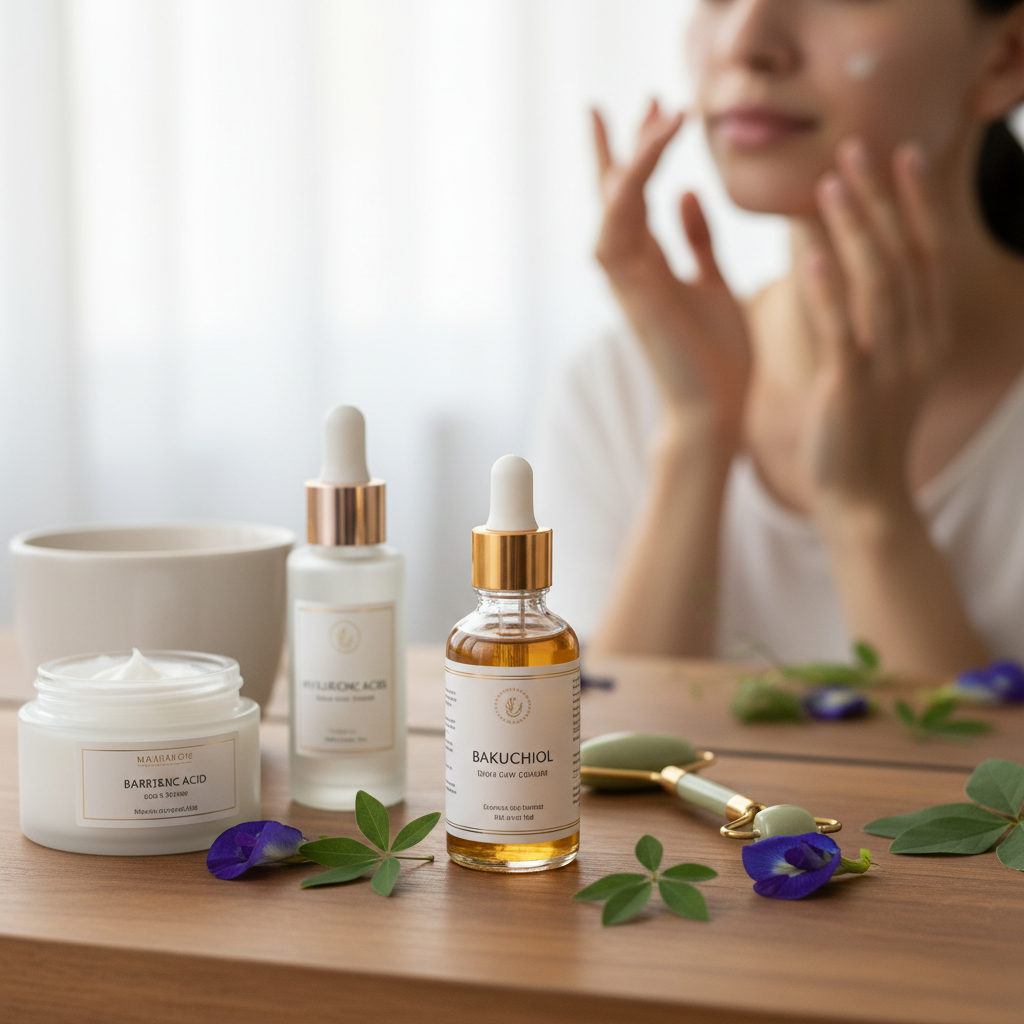
- Bakuchiol + Hyaluronic Acid & Ceramides: An ideal trio for reinforcing the skin barrier and ensuring deep hydration. Bakuchiol works on cellular regeneration while HA and Ceramides keep the skin plump and protected.
- Bakuchiol + Niacinamide: This pairing is fantastic for overall skin health. Bakuchiol targets aging signs, and niacinamide calms inflammation, supports the barrier, and helps with pore appearance.
- Bakuchiol + Vitamin C: A powerful antioxidant duo. It’s generally recommended to use Vitamin C in the morning for environmental protection and bakuchiol in the evening for repair, but they can be layered if your skin tolerates it well.
- Bakuchiol + Peptides: Both ingredients are collagen boosters. Peptides are short chains of amino acids that signal the skin to produce more collagen and elastin, making them a perfect complement to bakuchiol for improving firmness and elasticity.
- Bakuchiol + AHAs/BHAs (with caution): While bakuchiol is gentle, combining it with strong chemical exfoliants like AHAs (Alpha Hydroxy Acids) or Salicylic Acid (BHA) should be done cautiously. AHAs (e.g., glycolic, lactic acid) exfoliate the skin’s surface to improve texture and tone, while Salicylic Acid (BHA) is oil-soluble and penetrates pores to treat acne. It’s best to alternate these on different nights or use very gentle concentrations to avoid over-exfoliation and irritation. For example, use an AHA toner in the morning and bakuchiol at night, or use bakuchiol one night and an AHA serum the next.
The beauty of bakuchiol lies in its ability to integrate smoothly, allowing you to build a robust skincare routine without fear of adverse reactions often associated with combining multiple potent ingredients.
Drugstore vs. Prestige: Finding Effective Bakuchiol Products in 2026
In 2026, the lines between “drugstore” and “prestige” skincare continue to blur, especially concerning effective active ingredients like bakuchiol. What truly matters is the formulation, concentration, and stability of the product, not necessarily its price tag.
You can find excellent bakuchiol products at both ends of the spectrum. When evaluating options, look for:
- Adequate Concentration: Most effective bakuchiol products contain between 0.5% to 2% bakuchiol. This range has been shown in studies to deliver visible benefits.
- Stable Packaging: Bakuchiol, like many plant extracts, can degrade when exposed to light and air. Opt for products in opaque, air-tight containers (pumps or tubes are generally better than jars).
- Complementary Ingredients: Good formulations often include other beneficial ingredients like squalane, plant oils (e.g., rosehip, jojoba), or antioxidants to enhance efficacy and skin health.
- Ingredient List: Ensure bakuchiol is listed high enough on the ingredient list to indicate a meaningful concentration.
Many drugstore brands are now leveraging advanced science to create highly effective, accessible formulations. Conversely, some prestige brands offer luxurious textures but may not always deliver superior efficacy simply due to their price. Always prioritize ingredients and formulation over brand name or cost.
Remember that while at-home dermal-grade tools like LED masks are popular in 2026 for boosting cellular function, they work best when paired with a solid, consistent skincare routine that includes well-formulated actives like bakuchiol.
Decoding Labels: What to Look for in a Bakuchiol Product
Navigating skincare labels can be daunting, but knowing what to look for can help you choose an effective bakuchiol product for your anti-aging regimen.
- “Bakuchiol” clearly listed: This might seem obvious, but some products use proprietary blends or vague “plant extract” descriptions. Look for “Bakuchiol” specifically.
- Concentration: As mentioned, aim for products stating 0.5% to 2% bakuchiol. If a percentage isn’t listed, it might be in a lower, less effective concentration, though some brands choose not to disclose percentages for proprietary reasons.
- Formulation Type: Bakuchiol is often found in serums (water-based or oil-based) and moisturizers. Serums typically deliver a higher concentration of actives, while moisturizers offer a more holistic approach. Choose based on your preference and skin type.
- Synergistic Ingredients: Look for formulations that include other beneficial ingredients such as antioxidants (e.g., Vitamin E, green tea extract), humectants (e.g., hyaluronic acid, glycerin), and emollients (e.g., squalane, shea butter) to support overall skin health and hydration.
- Avoidance of Irritants: Especially if you have sensitive skin, opt for products free from harsh fragrances, essential oils, and drying alcohols.
A well-formulated bakuchiol product will feel pleasant on the skin and integrate seamlessly into your routine without causing irritation.
Maximizing Your Results: Beyond Bakuchiol
While bakuchiol is a powerful ingredient, achieving truly optimal anti-aging results requires a holistic approach that extends beyond a single active.
- Consistent Sun Protection: This is the single most important anti-aging step. Use a broad-spectrum Mineral SPF (zinc oxide, titanium dioxide) of at least SPF 30 every single day, rain or shine. In 2026, research continues to emphasize not just initial application but also diligent reapplication throughout the day, especially if you’re outdoors or near windows. UV radiation is the primary driver of premature aging.
- Hydration, Hydration, Hydration: Well-hydrated skin looks plumper, smoother, and healthier. Incorporate humectants like hyaluronic acid and glycerin, and emollients to lock in moisture.
- Healthy Lifestyle: Diet, sleep, stress management, and regular exercise all play a significant role in skin health. A nutrient-rich diet, adequate sleep, and managing stress can dramatically impact your skin’s appearance.
- Patience and Consistency: Skincare is a marathon, not a sprint. Visible results from bakuchiol and other actives typically take 6-12 weeks of consistent use. Stick with your routine to see the full benefits.
- Dermatologist Consultation: For personalized advice, especially for stubborn concerns or specific skin conditions, consulting a board-certified dermatologist is invaluable. They can help tailor a regimen that best suits your individual needs and recommend FDA-approved solutions.
By combining a well-chosen bakuchiol product with these foundational practices, you’ll be well on your way to achieving a youthful, radiant complexion.
Frequently Asked Questions
Is bakuchiol truly safe for pregnancy and breastfeeding?
While bakuchiol is generally considered a safer alternative to retinoids during pregnancy and breastfeeding due to its different mechanism of action and lack of systemic absorption concerns, it is always crucial to consult your obstetrician or dermatologist before introducing any new skincare product during these periods. Every individual’s situation is unique.